.png)
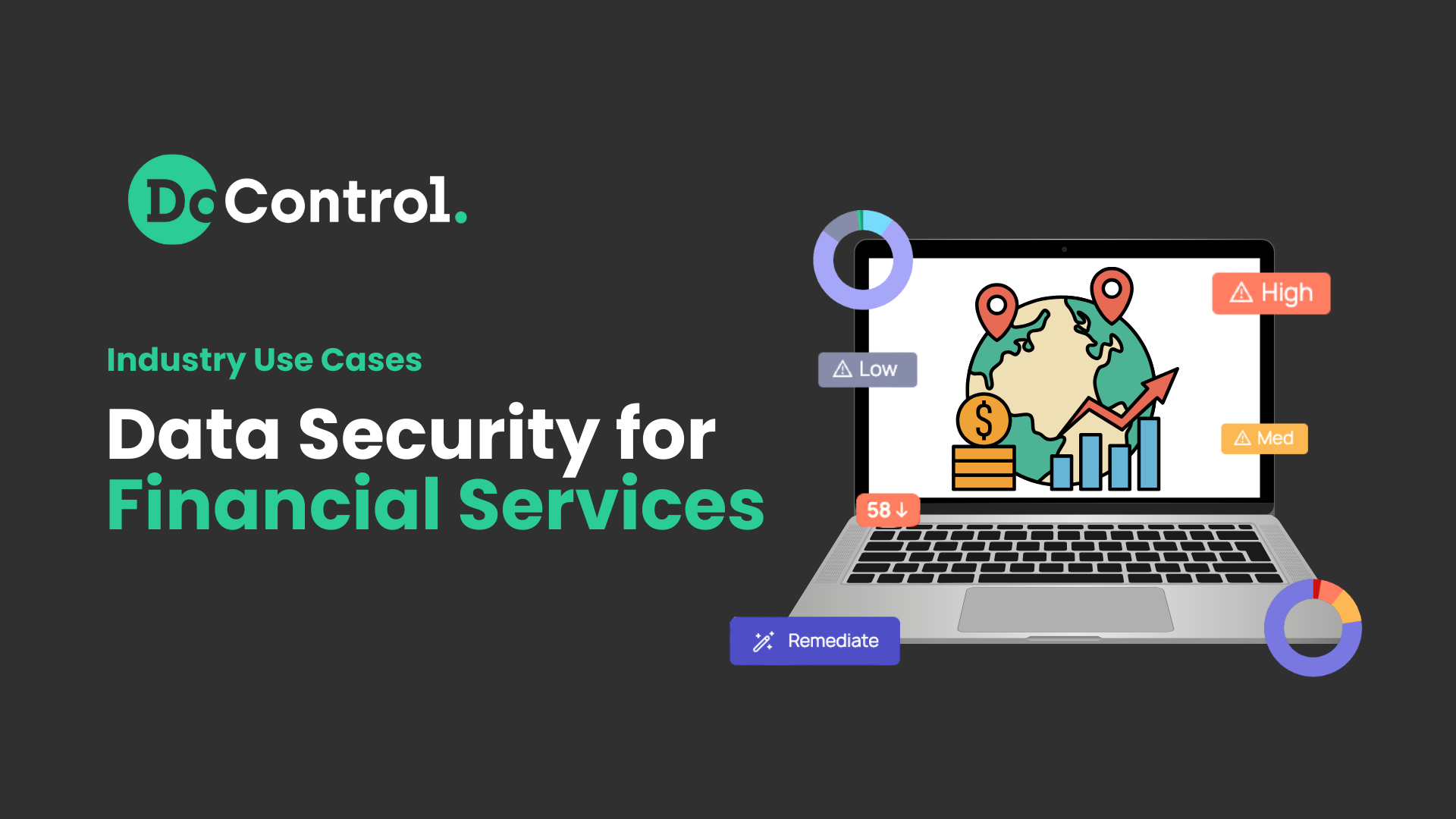
A comprehensive review of how financial services organizations protect sensitive data through intelligent, automated data security.
Why Financial Services Organizations Need Data Security
Financial services organizations sit at the center of the global economy - entrusted with managing, processing, and safeguarding some of the most sensitive financial and personal data in the world.
Customer trust is foundational to their success, and that trust is built on the expectation that financial data will be protected, governed, and handled responsibly at all times.
At the same time, today’s financial institutions operate across complex SaaS environments. Employees collaborate across teams, external platforms, and specialized financial systems - all while sharing and accessing highly sensitive data.
As these environments grow more distributed, financial services organizations must maintain strict control over who has access to what, how that data is used, and whether or not sharing aligns with regulatory and ethical standards.
Industry Overview: The Data Challenge in Financial Services
Financial services organizations manage vast amounts of regulated data across a wide range of internal teams, platforms, and workflows. From customer-facing operations to internal analysis and risk management, sensitive information moves continuously throughout the organization.
At the same time:
- Customer financial data containing PII is accessed by many internal users and systems, making visibility and access governance essential to preventing misuse or accidental exposure.
- Internal teams must operate behind strict ethical and informational boundaries, ensuring that confidential data does not move between groups that should remain isolated from one another.
- Highly specialized platforms and workflows are used to share and process financial data, yet organizations often lack visibility into what happens to that data once it enters these systems.
- Regulatory and compliance requirements demand continuous oversight, requiring organizations to demonstrate control over how financial data is accessed, shared, and governed.
Together, these realities make financial services one of the most complex and high-stakes environments for data security.
Key Security Challenges in Financial Services Environments
1. Governing access to sensitive financial data and PII
Financial institutions must know exactly who has access to customer financial data, what actions are being taken, and whether access permissions remain appropriate over time. Without continuous governance, access can quickly become outdated, over-privileged, or excessive as users switch roles or leave the company.
2. Enforcing internal sharing controls and ethical walls
Confidential data cannot move freely across internal teams. Maintaining ethical walls is critical to ensuring compliance, preventing conflicts of interest, and protecting the integrity of sensitive information.
3. Securing data shared across specialized financial platforms and workflows
Financial services organizations rely on industry-specific systems and data-sharing paths. Once data enters these environments, controlling downstream sharing and usage becomes significantly more difficult without centralized oversight.
4. Maintaining continuous compliance across highly regulated data environments
Regulatory frameworks require strict controls over how financial data is accessed, monitored, and protected. Without automation, compliance becomes reactive, manual, and prone to gaps.
Key Use Case 1: Governing Access to Sensitive Financial Data and PII
The Challenge
Financial services organizations must maintain complete visibility into who can access sensitive customer data, why they have access, and how that data is being used.
As permissions expand across teams, platforms, and workflows, outdated or excessive access creates significant risk - especially when access is not continuously reviewed or automatically adjusted for role changes or employee turnover.
Why It Matters
- Customer trust depends on the protection of financial data. Any unauthorized access or misuse directly undermines confidence in the institution.
- Excessive or outdated access increases exposure risk, making it easier for sensitive data to be misused, mishandled, or leaked.
- Manual access reviews cannot keep up with the pace of financial operations, leaving blind spots that threaten both security and compliance.
If Ignored
- Unauthorized access or misuse of customer financial data, leading to breach events and mandatory disclosures.
- Financial and legal consequences, including fines, penalties, litigation costs, and remediation expenses.
- Reputational damage, as customers and partners lose confidence in the institution’s ability to safeguard sensitive information.
- Operational disruption, as teams divert time and resources to investigate incidents and rebuild controls.
Key Use Case 2: Enforcing Internal Sharing Controls and Ethical Walls
The Challenge
Within financial services organizations, not all data is created equal. All data should not be accessible to all teams across the company. Ethical walls are essential to prevent sensitive information from reaching individuals or groups that shouldn’t have access to it.
However, when data is shared at scale across SaaS platforms and collaborative tools, enforcing these boundaries becomes difficult.
Why It Matters
- Ethical walls are a foundational requirement for financial integrity and compliance. Breakdowns can result in regulatory violations and conflicts of interest.
- Uncontrolled internal sharing increases the risk of accidental exposure, even when no malicious intent exists.
- Without automated enforcement, internal boundaries rely on manual processes, which are prone to error and inconsistency.
If Ignored
- Regulatory scrutiny and enforcement actions, resulting from failures to maintain required information barriers.
- Loss of institutional credibility, as stakeholders question governance maturity.
- Internal compliance failures, requiring extensive audits, investigations, and corrective actions.
Key Use Case 3: Securing Data Shared Through Specialized Financial Platforms
The Challenge
Financial institutions rely on highly specialized platforms and workflows to process and share sensitive data. Once data moves through these systems, organizations often lack visibility into downstream access, sharing, and usage - creating blind spots that increase risk.
Why It Matters
- Sensitive financial data must remain protected regardless of platform or workflow. Lack of visibility creates uncontrolled exposure.
- Even approved sharing paths can become risky without monitoring, especially as data is reused or redistributed.
- Security teams need insight into how data behaves beyond initial access controls.
If Ignored
- Loss of control over sensitive data once it enters specialized systems.
- Increased likelihood of data misuse or leakage, without clear audit trails.
- Challenges demonstrating compliance, particularly during audits or investigations.
Key Use Case 4: Maintaining Continuous Compliance for Financial Data
The Challenge
Financial services organizations operate under strict regulatory requirements governing data access, usage, and protection. Compliance depends on continuous enforcement (not periodic reviews) yet many organizations still rely on manual, reactive processes.
Why It Matters
- Compliance failures can impact every aspect of the business, from customer trust to operational continuity.
- Regulators expect ongoing proof of control, not one-time attestations.
- Manual compliance processes cannot scale, especially across large, distributed SaaS environments.
If Ignored
- Regulatory violations and audit failures, leading to fines, penalties, and mandated remediation.
- Escalating legal and financial exposure, including lawsuits and enforcement actions.
- Long-term reputational harm, affecting growth, partnerships, and market confidence.
How DoControl Helps Financial Services Organizations Secure Sensitive Data
Governing Access to Sensitive Financial Data and PII
DoControl enables financial services organizations to maintain continuous, real-time visibility into who has access to what sensitive financial data and PII across their SaaS environment.
Through data access governance and granular access controls, security teams can understand why users have access, whether that access is still appropriate, and how the data is being used.
DoControl’s contextual monitoring and insider risk detection identify risky behaviors - such as excessive downloads, unusual access patterns, or sharing to unauthorized destinations - and automatically remediate exposure through policy-driven workflows. This ensures sensitive customer data is protected at every stage of its lifecycle.
Enforcing Internal Sharing Controls and Ethical Walls
DoControl helps financial institutions enforce ethical walls by monitoring and controlling how sensitive data is shared internally across teams, departments, and platforms.
Using context-aware policies, DoControl ensures confidential information only flows through approved paths and remains inaccessible to unauthorized internal users. I
If data is overshared or shared outside defined boundaries, automated remediation workflows immediately revoke access, remove inappropriate permissions, or restrict further movement - preventing accidental exposure and supporting compliance with internal governance and regulatory requirements.
Securing Data Shared Through Specialized Financial Platforms and Workflows
Financial services organizations rely on highly specialized platforms to process and share sensitive data, but visibility often stops once data enters these systems.
DoControl extends security and governance across these workflows by tracking how data moves, who interacts with it, and whether sharing aligns with pre-defined security policies.
Our DLP controls monitor data usage, flag anomalous behavior, and automatically intervene when a risky event takes place. This allows organizations to maintain control over sensitive data - even as it moves across complex, business-critical platforms.
Maintaining Continuous Compliance Across Regulated Data Environments
DoControl embeds compliance directly into everyday data usage by enforcing consistent security and access policies across all SaaS applications.
Instead of relying on periodic reviews, organizations benefit from continuous compliance enforcement aligned with regulatory requirements.
Automated monitoring, configuration drift dashboards, tailored recommendations, and scalable remediation workflows ensure that access permissions, data sharing, and user behavior always remain within compliance standards.
All of these capabilities and more reduce the risk of violations, fines, and regulatory scrutiny while easing the operational burden on security and compliance teams.
Key Takeaways
Financial services organizations face immense responsibility in protecting sensitive customer data while enabling efficient, compliant collaboration across complex environments.
Governing access, enforcing ethical walls, securing specialized data flows, and maintaining continuous compliance are foundational to operating safely and credibly in this industry.
Automated data security gives financial institutions the visibility, control, and enforcement needed to protect sensitive information at scale - without slowing down critical financial operations.
DoControl gives financial service institutions the confidence and the tools to protect what matters most: the integrity of their business, their people, and the confidence customers have in the systems that safeguard their financial lives.
{{cta-1}}