.png)
Every security vendor is now an AI security vendor. Scroll through any vendors homepage, any LinkedIn bio, or any funding announcement – the language has converged overnight. Everyone now has an AI security platform. Everyone has the next new module that is going to solve AI security, fix all the agents in your environment, and completely eliminate your AI risk.
Almost none of them address what the problem actually is in AI security.
That's not an accident. It’s because there isn’t one solution to the problem.
"AI security" isn't one thing. It's not a category – it's an ecosystem. Securing AI means securing identity, infrastructure, applications, models, and data, and each of those disciplines demands different controls, different expertise, and different vendors. No single platform solves all of them, no matter what the pitch deck or their homepage messaging says.
So before any security leader asks which AI security platform should we buy, they need to ask a harder question first: which AI security problem are we actually trying to solve?
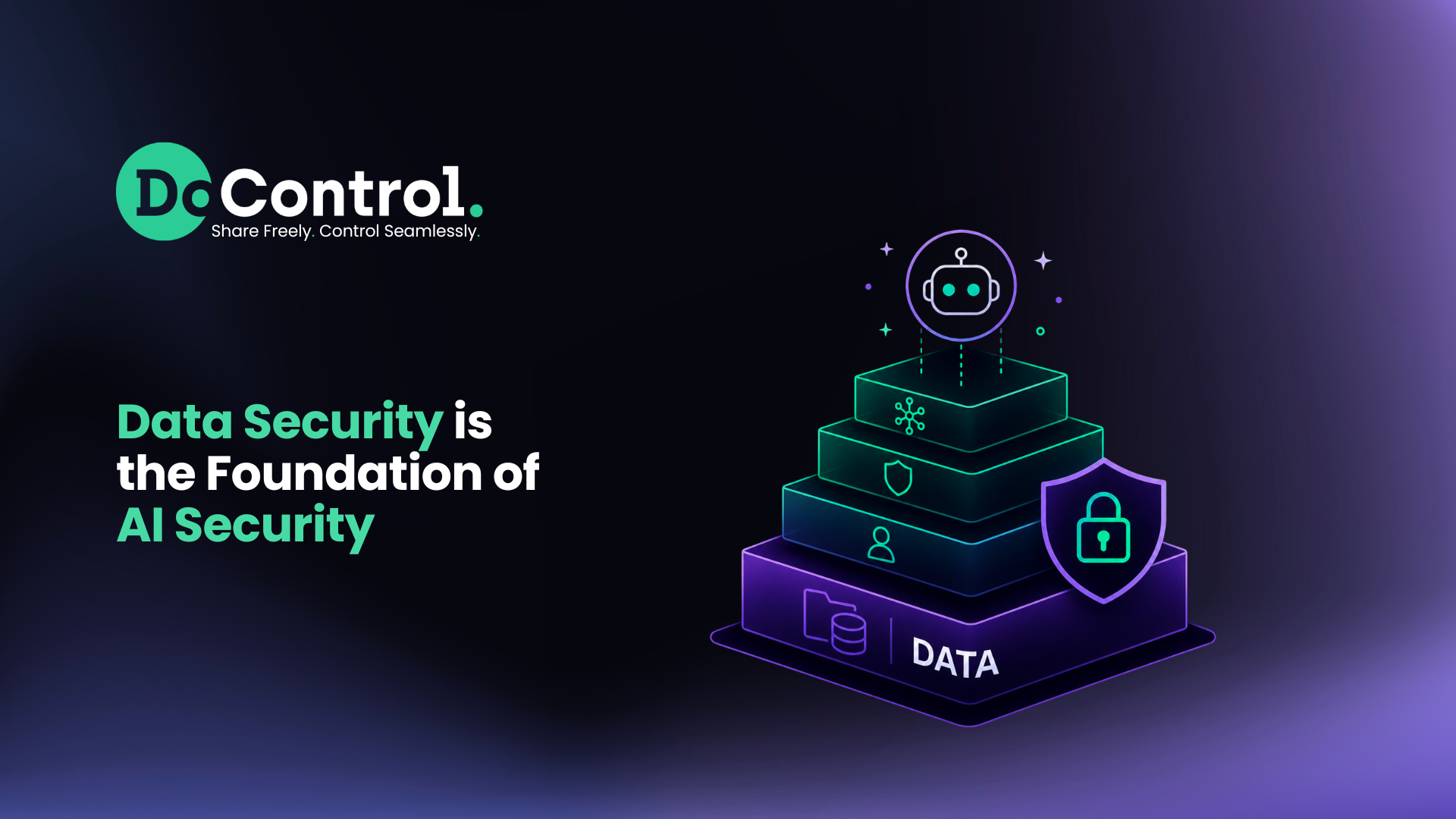
We have an answer for our piece of that ecosystem. We believe the most foundational – and most overlooked – layer of AI security is the data itself.
Think about it: every AI interaction starts with data
Strip away the model architecture, the prompt engineering, the agentic orchestration – and every single AI interaction reduces to the same five steps:
- AI accesses data.
- AI retrieves information.
- AI reasons over it.
- AI generates something.
- AI acts.
Step one is always data. Not sometimes. Always.
Think about it: an AI assistant is only as safe as what it's allowed to touch.
It doesn't matter how well-aligned the model is, how carefully the prompts are engineered, or how sophisticated the guardrails are at the application layer – if the underlying data access is a mess, the AI will faithfully, efficiently, and instantly expose that mess to anyone who knows how to ask.
That's the part of the AI security conversation that gets skipped. Everyone wants to talk about jailbreaks, prompt injections, hallucinations, etc. Almost no one wants to talk about the seven-year-old Shared Drive permission that nobody remembers granting that Gemini has access to, and gives it to the intern when they ask a basic question to their chatbot.
"Internal" was never the same thing as "Secure"
For a decade, security teams built their data protection strategy around a single question: is this leaving the organization? Public links, external collaborators, unauthorized downloads, email exfiltration – that's where the budget went, and for good reason. External exposure is loud, fast, and obviously bad.
But that focus quietly let a second problem grow in the background: internal exposure. Compensation data, HR investigations, board decks, financial forecasts, product roadmaps – these are all examples of confidential files that sit in a companies Google Workspace environment.
Most of it is shared internally. All of it, in practice, sitting in Shared Drives and Google Groups accessible to far more people than anyone intended – accumulated through years of small, reasonable-seeming decisions. A folder shared broadly to hit a deadline. A contractor's access that never got revoked. A department that skipped individual permissions because managing them felt like friction, not risk.
Before AI, this didn't matter as much as it should have. Finding that buried file required knowing it existed, remembering its name, digging through folders. The permission was excessive, but the friction of discovery kept it dormant.
AI removes that friction entirely.
Tools like Gemini don't create new access. They don't bypass a single security control. They just make years of accumulated permissions instantly, conversationally discoverable. Ask a question, get an answer – and if you already had access to the underlying file, intentionally or not, the AI will happily surface it. What once took a determined employee an afternoon of digging now takes anyone ten seconds and a prompt.
We didn't get a new risk. We got a magnifying glass held up to an old one.
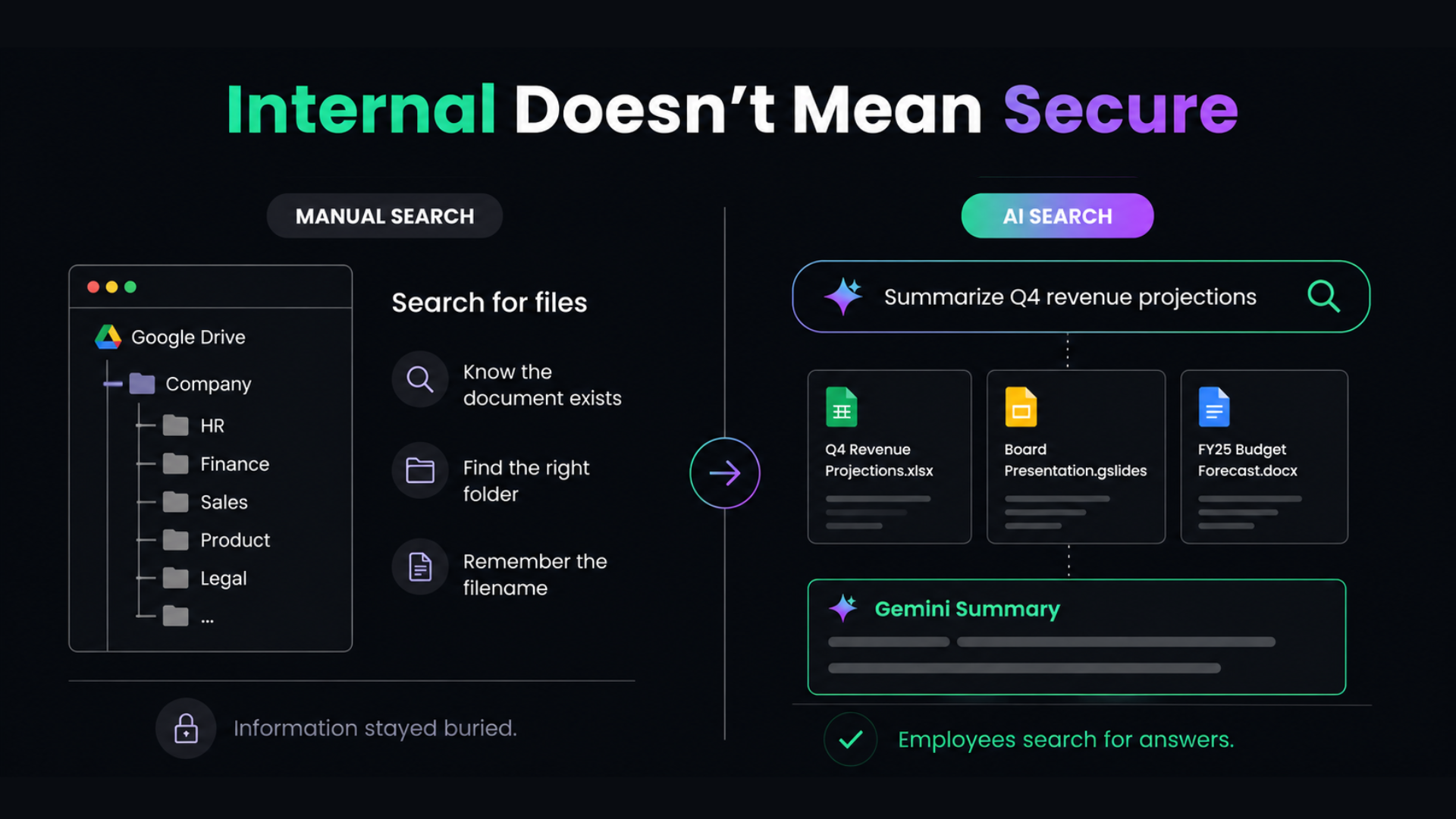
To get more information on this topic, read our blog: Internal Doesn’t Mean Secure: How AI is Exposing Your Data
The data governance model has changed
This is why we think the industry's instinct to answer AI risk with more DLP is only half right. Traditional DLP was built to answer a binary question: can this leave, yes or no? It's good at that. It is not built to answer the questions AI is now forcing onto every security team's desk:
- Should this employee still have this access today, or is it left over from a role they held two years ago?
- Does this permission still match what their job actually requires?
- If someone asked an AI assistant about this exact topic right now, would we be comfortable with what it could surface?
Those aren't hypothetical governance exercises anymore. They're live security questions, and they change by the day – every reorg, every offboarded contractor, every finished project leaves behind a little more permission drift.
Now, multiply that across an organization's entire SaaS footprint and you get an internal attack surface that grows quietly, invisibly, and is now one prompt away from being exploited – not maliciously, just by an employee doing exactly what the AI enabled them to do.
Data governance is still as important as ever; but it matters even more now. The company data training these models, fueling them, and enabling employees to use them is exactly what needs protecting, more than at any point before.
The DoControl position
We're not here to tell security teams to slow down AI adoption. AI is already inside the organization, already answering questions, already touching data. The choice was never AI or no AI.
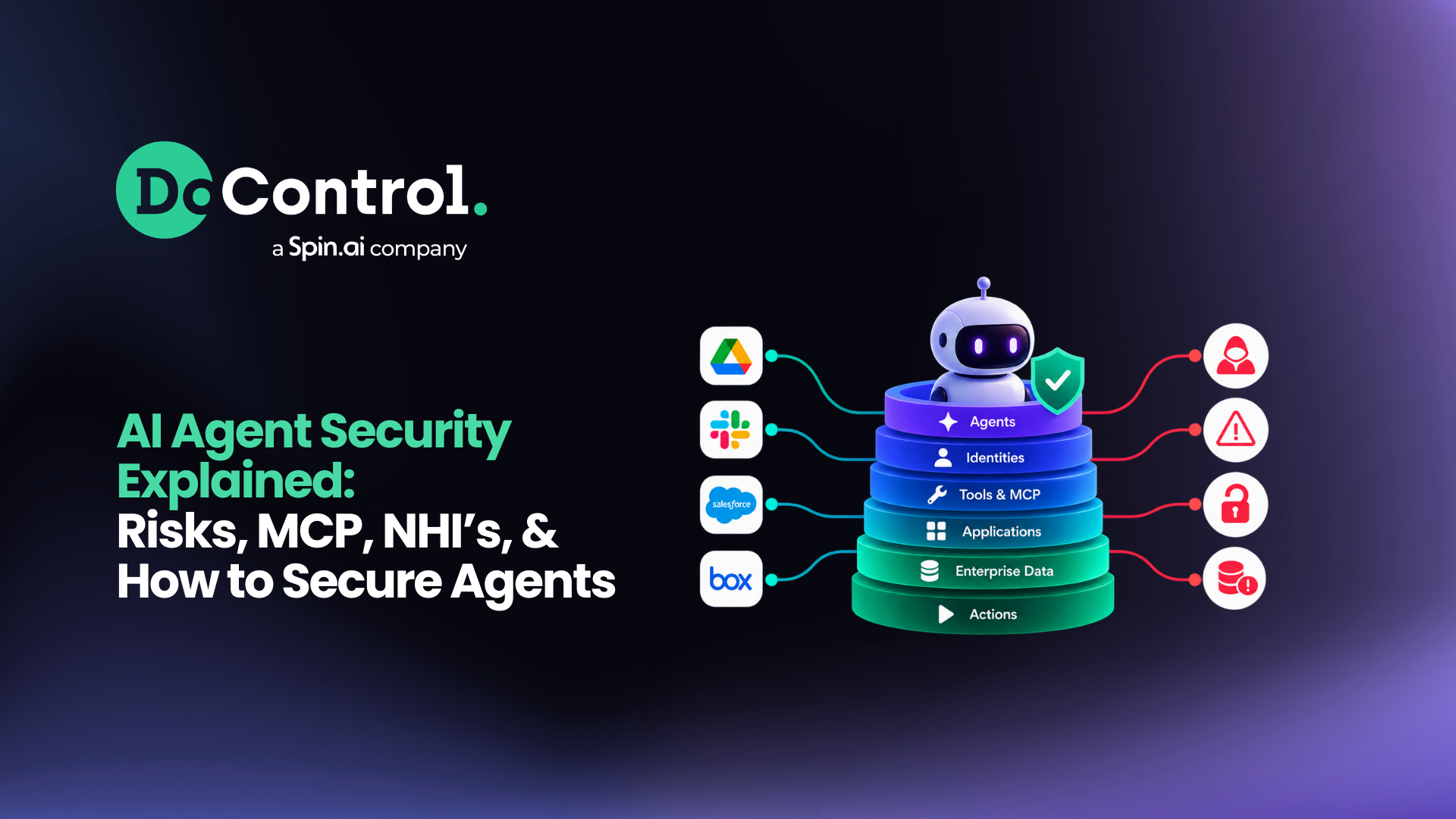
AI security isn't a product category, and anyone selling it to you as one is selling you something smaller than the problem. It's an ecosystem: identity, infrastructure, applications, models, and data, each with its own discipline, each requiring its own expertise.
We've chosen our layer deliberately. We believe data security is the foundation everything else is built on, because every AI interaction, without exception, starts there. Secure the data access layer, and you've secured the thing every model, every agent, and every prompt ultimately depends on.
Get that foundation wrong, and no amount of model alignment, prompt filtering, or application-layer security will save you – because the AI itself isn't the vulnerability. It's just very, very good at finding one.
{{cta-1}}