
The threat landscape in Fall 2026 has made global headlines defined by two structural shifts: the automated weaponization of deep legacy codebases using frontier AI models, and high-velocity, cross-border targeting that scales past traditional barriers.
Just like how scripts like Sub7 and LOIC made hacking easier with premade scripts 25-30 years ago, Agentic AI is allowing a single user to act as an architect for a virtual army of hackers.
The agents can derive deep understanding of environments totally foreign to the intruder and continue to try to find ways through barriers in a completely automated and autonomous manner.
From critical vulnerabilities affecting core engine layers powering 70% of the web to nationwide cybersecurity emergencies triggered by AI-boosted reconnaissance, security teams are witnessing a rapid compression of the time window between flaw discovery and widespread exploitation.
Even worse, once an exploit is found, the AI can move on to the next while the researchers scramble to patch (even with AI assistance). AI allows for exploits to be found faster than they can be patched and secured. This is a massive acceleration of offensive capability.
Below are high-profile examples of these recent cyber incidents, what they signal about threat actor capabilities, and how security leaders must adjust their defense posture.
Recent Cyberattack Incidents
1. PHP2Shell: The AI Inflection Point in Vulnerability Exploitation
In October 2026, security researchers disclosed PHP2Shell—a set of critical vulnerabilities (CVE-2026-109618 and CVE-2026-109619) residing in the core engine of PHP, affecting virtually every release dating back to PHP 5.4.
Because PHP powers over 70% of all websites globally (including content management systems like WordPress, Drupal, and Joomla), the reach is virtually unprecedented.
The Technical Reality
The vulnerabilities stem from how PHP manages fatal errors (such as out-of-memory events) during initial request processing. When a request crashes mid-stream, corrupted internal memory pointers remain published in the global worker state. Subsequent requests handled by the same worker can reuse this stale state:
- Remote Process-Memory Disclosure: Allows unauthenticated attackers to read sensitive process memory—including API keys, session tokens, and passwords from other requests—via malformed multipart upload cookies.
- Unauthenticated Remote Code Execution (RCE): By combining memory disclosure with use-after-free primitives and OPcache type confusion, attackers can reliably execute arbitrary code on the underlying server.
Why AI Changed the Equation
What makes PHP2Shell a historical case study is not merely that the flaw lay hidden for over a decade, but how it was converted into a working exploit. Building a cross-request memory exploitation chain across dynamic heap environments traditionally required months of manual reverse-engineering.
By utilizing frontier AI models, such as Gemini 4 Argon and GPT-5.6 Sol (as of the writing of this article), researchers reduced this timeline from months to days. AI models analyzed heap layout variations across different PHP configurations, debugged failing exploit paths, and adapted memory primitives automatically.
Key Takeaway: Complexity is no longer a durable barrier to entry. If a vulnerability exists in code - even deep structural flaws - AI enables threat actors to iterate through target memory layouts at zero marginal cost. Manual work required due to complexity used to act as a significant deterrent. That deterrent is now eroded.
2. Japan’s Cybersecurity Emergency: Automated Reconnaissance and Mass Scaling
While PHP2Shell highlighted AI's role in micro-level exploit generation, the crisis declared by Japan's National Cybersecurity Strategy Headquarters (NCSH) demonstrates AI's impact on macro-level campaign execution.
Following coordinated cyberattacks affecting over 20 major corporations—including railway operator JR East, retail giant Lawson, car rental operator Times Car, and beverage producer Asahi—Japanese officials declared an official "emergency in cyberspace".
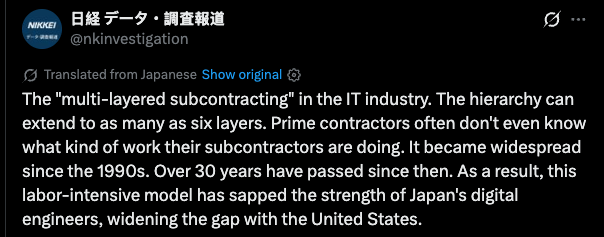
Major Japanese corporations have traditionally relied on subcontractors for a lot of their IT infrastructure and so handling cyber attacks, especially AI automated and augmented ones, is especially difficult for them.
Deconstructing the Attack Dynamics
- Elimination of Localization Barriers: Traditionally, foreign threat actors struggled to craft convincing phishing lures or navigate native Japanese software interfaces. Modern LLMs have completely eliminated language and context barriers, enabling seamless socio-technical attacks.
- "Carpet Bombing" Targeting Strategy: Rather than focusing solely on top-tier global banks, attackers deployed automated scanning bots to target regional suppliers, secondary rental APIs, and localized booking engines. These companies would have even less IT resources to help combat cyber attacks.
3. Physical Impact: The Rise of Cold-Chain and OT Cyberattacks
A subtle yet dangerous trend emerging from this fall's incident stream is the shift from pure data exfiltration to operational technology (OT) disruption.
Recent disruptions targeting commercial refrigeration networks—such as Swedish grocery store freezer failures and compromised blood plasma storage freezers in Europe—demonstrate how digital compromises translate into immediate physical supply chain loss.
Attackers are increasingly targeting central facility management protocols, IoT gateways, and industrial cooling controls. When combined with credential stuffing or unpatched application server flaws, adversaries can disrupt real-world logistics without needing custom industrial malware.
Similar attacks were also reported in the US Army, which has now opened another domain to cyber warfare. Hacking of a freezer on a military installation can severely impact logistical capabilities.
Strategic Recommendations for Defense Teams
To counter AI-accelerated discovery and broad-spectrum campaign automation, organizations must adjust their security operations from reactive patching to proactive surface reduction:
1. Shift Focus to Engine-Level and Infrastructure Visibility
Application-layer security logs often miss engine-level memory exploitation.
- Monitor for unusual multipart requests followed by unexpected HTTP 500 errors or PHP worker crashes.
- Enforce runtime protection (eBPF-based kernel monitoring) to detect unexpected process spawns from web server workers.
2. Implement Identity-Centric Access Control & SaaS Guardrails
As threat actors leverage leaked credentials to move laterally through cloud ecosystems:
- Enforce strict, contextual access controls across all SaaS applications and internal microservices.
- Shift from image-based identity verification to cryptographically verified, hardware-backed identity standards.
3. Eliminate Stale Data Exposure
The high volume of data leaked in recent attacks underscores the danger of over-retained customer data.
- Implement automated data loss prevention (DLP) policies to discover, classify, and revoke unauthorized access to sensitive PII stored within cloud repositories and SaaS platforms.
Conclusion
The incidents of Fall 2026 confirm that we have entered an era where vulnerability complexity no longer guarantees security. Whether through AI-assisted memory exploitation or scalable "carpet bombing" campaigns against enterprise supply chains, defenders must assume that any exposed vulnerability will be analyzed and targeted faster than ever before.
Securing modern organizations requires continuous monitoring of data flows, automated remediation of identity risks, and eliminating hyper-exposed assets across your SaaS and cloud footprint.