.png)
Insider risk remains one of the most prominent causes of security incidents, data breaches, and organizational downfall. In just the past few months alone, there have been a number of shocking incidents stemming from insider risks that have taken the security world by storm. Just to name a few, there was:
Google: a trusted former employee was stealing company AI trade secrets, resulting in 14,000 pages of stolen confidential material over the course of a year, where he was building relationships with technology companies overseas (in China) and preparing to launch his own startup.
Intel: a former employee leaving the company stole roughly 18,000 confidential files, some marked “Intel Top Secret.” Over several days before he officially resigned, he allegedly downloaded tens of thousands of files, including proprietary software, source code, and confidential project data.
Palantir: two former employees of Palantir sent sensitive files containing trade secrets from her company Slack workspace to a personal Slack account the day before resigning. After, those two employees launched a competitor startup and took nearly 50% of the Palantir workforce with them to their new company - including its Co-Founder & CEO.
TMSC: a longtime senior executive (their Senior Vice President, to be exact) was caught stealing confidential company data before resigning, and bringing it to their new company. The stock dropped more than 3% after the news broke.
And the list goes on and on.
95% of cybersecurity incidents occur due to human error and employee data misuse.
Why is this number so big? It isn’t that security teams are incapable of spotting these anomalies and dealing with the risk properly. Actually, it’s quite the opposite.
On a day-to-day basis, security teams get thousands of alerts. A million things are happening at once. They are managing every SINGLE part of risk at their organization.
But, it's called risk management, not risk elimination.
Security teams simply can't care about everything. There just isn't enough time or resources to. They focus on the things that absolutely demand their attention, and stick out immediately as risky or dangerous.
The real reason why insider risk is seemingly insolvable and why it remains the most common threat vector in SaaS ecosystems is because most of the time, data theft by employees and insider risk looks like normal work.
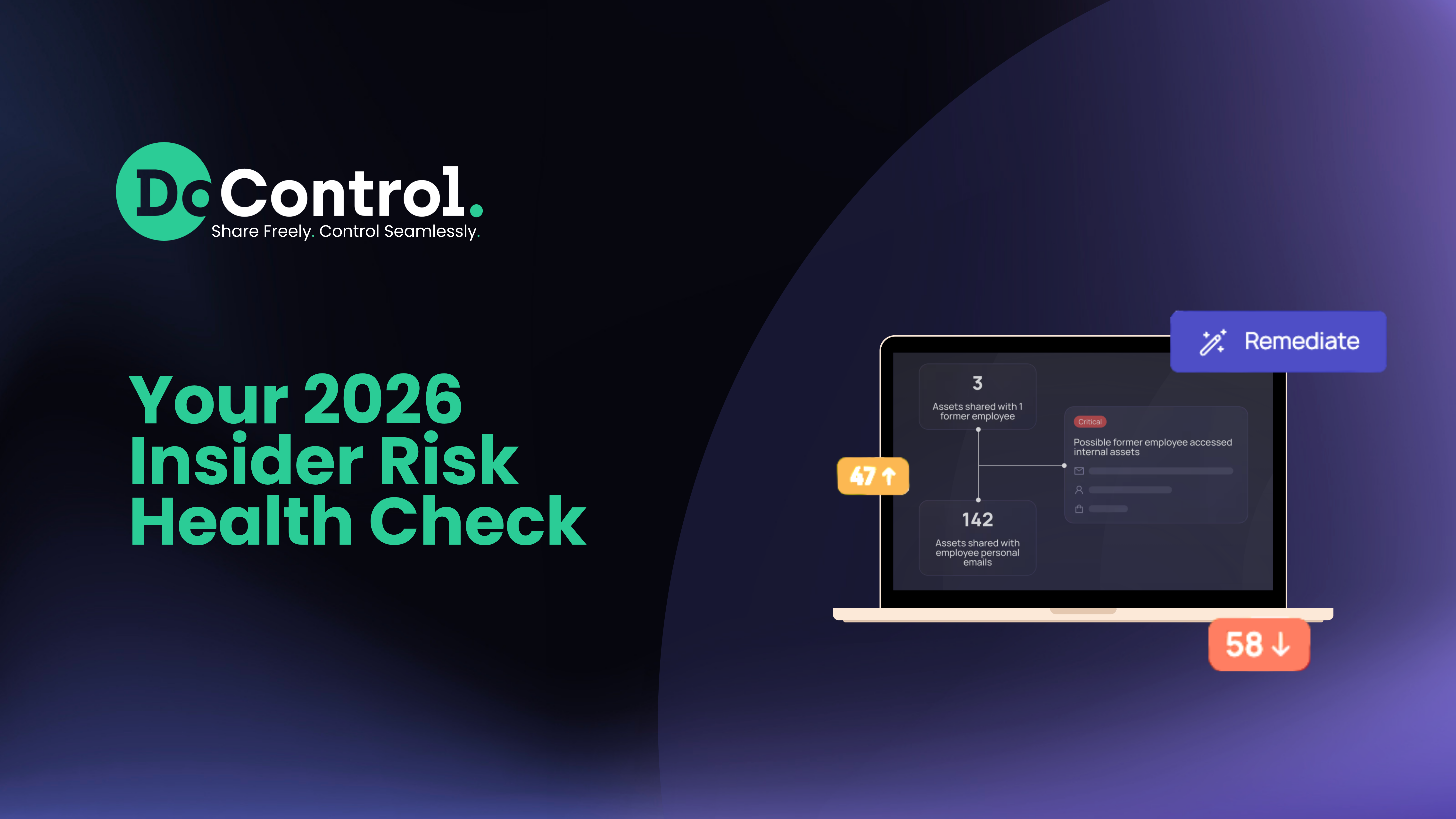
This Is Exactly Why We Created the 2026 Insider Risk Health Check
If data theft triggered flashing red alarms every time, it wouldn’t be the most common threat vector in SaaS.
But insider risk doesn’t announce itself. It hides inside completely legitimate behavior.
An employee shares a sensitive document externally - because they’re collaborating with a vendor.
A departing employee downloads files in bulk - because they’re prepping to train their team member who’s taking on their workload.
A long-tenured executive shares a sensitive document to their personal email - because he wants to work from the plane.
A team member connects a third-party OAuth app - because it improves productivity.
Individually, none of these actions look catastrophic. In fact, they look normal, necessary, or even productive.
Without context - without understanding intent, historical behavior, permission scope, sensitivity of the data, and business justification - it’s nearly impossible to distinguish risky activity from routine work.
Security teams lack the context to see this distinction in real time and remediate it immediately.
That’s why we built the 2026 Insider Risk Health Check.
It serves as a fast, focused way to pressure-test how insider risk actually manifests inside modern SaaS environments.
In just three minutes, the Health Check will help you:
- Evaluate how well you can distinguish legitimate collaboration from risky exposure
- Assess whether over-permissioning and personal account sharing are being actively managed
- Identify gaps in visibility across employee data movement
- Inform you on how you can remediate these risks in real time
- Benchmark your insider risk posture with a personalized score
After the quiz, you’ll receive a personalized risk score and get tailored recommendations based on your responses. You can then take a free risk assessment to further your education on what needs to be done in your SaaS environment.
If you’re responsible for securing SaaS ecosystems at your org, this is a fast, free, & easy way to see where you actually stand and what the gaps are in your insider risk strategy.
The Real Value it Brings You
Insider risk isn’t about obvious policy violations. It’s about the activity that blends in.
We created the Insider Risk Health Check because the SaaS security landscape has fundamentally changed. Data is no longer centralized. Access is dynamic. Employees work across dozens of connected applications. Collaboration extends far beyond organizational boundaries.
The traditional perimeter doesn’t exist inside SaaS. And yet, many insider risk strategies still rely on static controls and reactive alerts.
We’ve seen firsthand how difficult it is for security teams to gain full context around what’s happening inside trusted platforms like Google Workspace.
We built this Health Check to give security leaders something simple but powerful:
Clarity.
A way to challenge assumptions.
A way to uncover blind spots.
A way to benchmark insider risk readiness without committing weeks to an audit.
Because when risk looks like normal work, you need more than policies, you need perspective.
See Where You Stand
You don’t need another dashboard.
You need to know whether the visibility you think you have actually matches the risk inside your SaaS ecosystem.
The 2026 Insider Risk Health Check takes just three minutes.
You’ll walk away with:
- A personalized insider risk score
- Tailored recommendations
- A clearer understanding of where hidden exposure may exist
Risk management will never mean risk elimination.
But it can mean better visibility. Better context. Better control.
{{cta-1}}