.png)
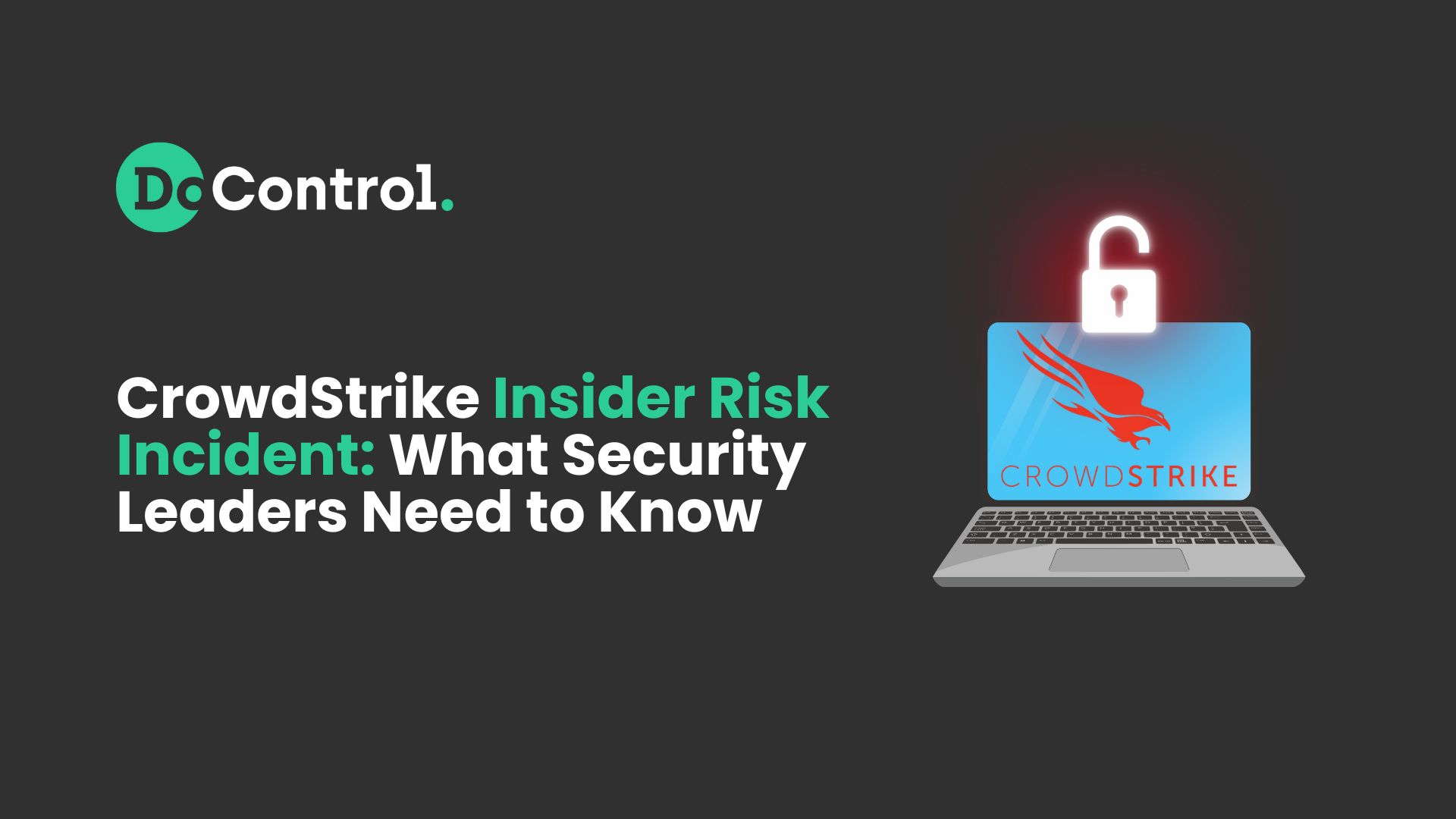
CrowdStrike - one of the world’s most respected cybersecurity companies - recently confirmed that it had identified and terminated a malicious insider who attempted to share confidential company data with a notorious hacker group, ShinyHunters.
According to public reports, the insider was caught sharing screenshots from internal systems, and even handed over SSO authentication cookies to the cybercrime group. ShinyHunters even claim to have offered the insider $25,000 for deeper access into CrowdStrike data.
CrowdStrike acted quickly, firing the employee and involving law enforcement. But the incident highlights a difficult truth for every organization: insider risk is evolving faster than most security programs are prepared for.
Attackers no longer need to hack their way in; in many cases, they simply need to approach
This is a wake up call for companies, and they are increasingly becoming aware that their employees and people are their biggest attack vector.
What Actually Happened in the CrowdStrike Insider Incident?
The details of the CrowdStrike incident reveal just how quickly insider activity can escalate - and how difficult it can be to detect without continuous monitoring.
According to public reporting, a lower-level employee inside CrowdStrike was caught:
- Sharing internal screenshots externally
- Providing SSO authentication cookies to the threat group ShinyHunters
- Engaging with the group after being offered $25,000 for deeper access
These are not actions requiring elevated privilege, advanced hacking skills, or specialized tooling. They are actions made possible by legitimate access - the same access thousands of employees, contractors, and support staff rely on and are granted every day to do their jobs.
Even with a fast response from Crowdstrike, the incident exposes several uncomfortable realities:
- Threat actors are actively recruiting insiders → The fact that ShinyHunters publicly confirmed the attempted transaction indicates just how common these recruitment attempts have become (and how they’re only growing in popularity!)
- Low-privilege employees can create high-impact risk → SSO cookies, screenshots, and small internal artifacts can be enough to start or aid in a broader compromise that has ripple effects across the entire organization.
- Insider activity always starts small → A screenshot here, a cookie there… then suddenly, credentials, sessions, or support access are in the hands of a cybercrime group with bad intentions.
- Most companies would not catch this in time → CrowdStrike did - as they should - they are one of the biggest cyber firms in the world. But, many and most organizations lack the visibility or automated detection needed to surface subtle insider behaviors before damage occurs.
For years, security leaders focused their programs on stopping external actors from breaching perimeter defenses. But this incident shows the shift clearly:
It’s increasingly easier for attackers to bribe, target, or approach an insider than to hack a Fortune 500 company!!!
Threat groups like ShinyHunters actively:
- target employees on social media and messaging platforms
- offer fast cash for low-effort access
- ask for simple artifacts like screenshots, cookies, or tokens
- escalate demands once they know an employee is willing to engage
Just as we thought the insider threat landscape couldn't get any worse, this emerges as a new trend. And it’s terrifying.
Why are Low-Level Employees the Biggest Insider Risk Targets for These Types of Attacks?
One of the most important takeaways for security leaders is that the insider in this case was not a senior engineer, executive, or administrator (like last week's insider incident at TSMC, where an SVP stole confidential data…) . They were a lower-paid support employee - the exact profile threat groups target:
- help desk staff
- contractors
- temporary workers
- offshore teams
- recently acquired employees through M&A
These individuals often have:
- broad visibility into internal platforms
- permissions to reset accounts
- access to sensitive internal workflows
- the ability to see authentication artifacts
Signs of Suspicious Insider Behavior:
Most insider incidents begin with small, almost invisible actions:
- sharing an image or file externally to a personal account or unrecognized domain
- downloading files en masse to a personal device
- accessing files, documents or tools they rarely use or shouldn't be accessing
By the time these actions accumulate enough to look obviously malicious, the damage is usually done.
Most orgs wouldn’t catch this in time. CrowdStrike did the right thing: they detected, investigated, and escalated quickly. But, CrowdStrike is one of the most advanced cybersecurity companies in the world.
Most organizations:
- lack unified SaaS visibility
- can’t detect abnormal user behavior until days or weeks later
- rely on manual review or ticket-based investigation
- don’t monitor low-level support staff with the same scrutiny
- don’t have automated workflows for insider-risk events to remediate things automatically
And that gap is exactly what attackers are exploiting.
How DoControl Prevents Insider Threats
Real-Time Monitoring Across SaaS Applications
DoControl continuously analyzes user behavior across all connected SaaS tools. This means early indicators of insider activity - like abnormal file access, unusual app activity, or unexpected communication with external domains - are immediately visible.
In a scenario like this, DoControl would detect:
- sudden spikes in file views, previews, or downloads
- atypical sharing behaviors
- interactions with personal or unknown email domains
- suspicious access patterns tied to SSO or authentication artifacts
- activity outside the user’s normal behavioral baseline
Via our ITDR module, these signals would raise real-time alerts before the insider gained momentum or escalated activity.
Automated, Policy-Driven Controls
Depending on the organization’s policies, DoControl can automatically take action:
- Block external sharing attempts from corporate SaaS apps
- Quarantine files suspected of containing sensitive data
- Revoke access from risky users, contractors, or offboarded employees
- Force MFA or reauthentication when anomalous activity is detected
- Trigger automated workflows for investigation and remediation
This ensures security teams don’t just see insider events - they can stop them in progress.
Behavioral Baselines That Surface Subtle Threats
Most insider incidents start small: a screenshot, a cookie export, a file preview. DoControl identifies deviations from each user’s normal behavior, so even modest anomalies are surfaced early.
For example:
- A support employee accessing data they rarely use (or don’t need to use based on their scope and day-to-day activities)
- Unusual file navigation patterns that don't align with their usual behavior
- A burst of activity at odd hours or a suspicious IP location
- Sharing actions that don’t align with the user’s job or responsibilities
This proactive detection is crucial, because insider threats often escalate quietly until it’s too late.
Protection for Contractors, Support Staff, and High-Turnover Roles
The CrowdStrike case demonstrates that high-impact risk often comes from low-privilege roles. DoControl applies the same level of monitoring and automated guardrails regardless of title or seniority.
This closes a major blind spot most organizations have around:
- vendors
- contractors
- support desk workers
- new hires
- recently laid-off or offboarding employees
When employee access is misused - even subtly - DoControl intervenes in real time.
Bottom line? With DoControl in place, the insider’s attempts to share screenshots, artifacts, or authentication materials would have been detected, flagged, and contained long before they could reach an external threat actor.
Key Takeaways for Security Leaders
- Insider threats don’t require high privilege = Even support-level staff can jeopardize sensitive systems.
- Attackers are actively recruiting insiders = It’s easier to bribe an employee than exploit a zero-day.
- SaaS is now the primary insider attack surface = Screenshots, cookies, and shared files are the new currency of insider activity.
- Traditional DLP, IAM, and SIEM tools miss early indicators = They’re not designed for subtle, behavioral anomalies inside SaaS environments.
- Continuous visibility + automated enforcement is mandatory = Manual review is too slow. Insider activity evolves in minutes.
- DoControl closes the visibility gap = By monitoring, detecting, and blocking risky activity in real time, it turns potential insider incidents into contained events instead of full-scale crises.
Conclusion
The CrowdStrike insider incident is a stark reminder that modern insider threats don’t begin with large-scale data theft - they begin with small actions that are easy to miss and easy to hide inside everyday SaaS workflows.
Attackers know this, which is why they now target and recruit insiders as readily as they craft phishing campaigns.
Organizations can no longer rely on perimeter tools or trust-based assumptions to protect their most sensitive data.
They need real-time visibility into how users interact with SaaS applications, automated controls that intervene before data leaves the environment, and behavioral intelligence that distinguishes normal work from high-risk activity.
Insider risk is a real, present, active threat - and without the right safeguards, every organization is one small action away from becoming the next headline.
Sources:
https://www.thestack.technology/crowdstrike-ejects-insider/
{{cta-1}}