.png)
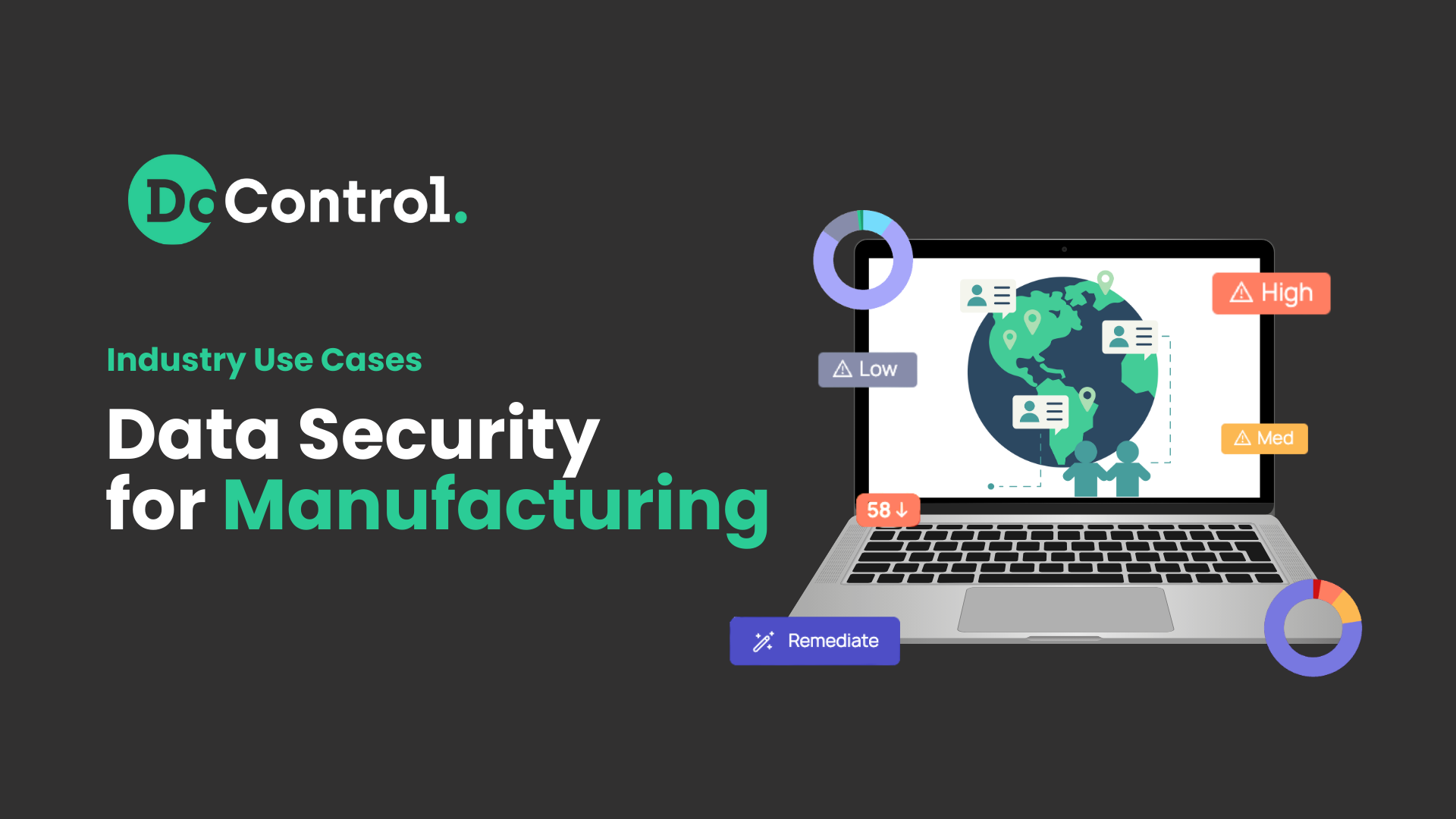
A comprehensive review of how DoControl protects manufacturing organizations everywhere through advanced data security.
Why Manufacturing Companies Need Data Security
Manufacturing organizations operate at enormous scale, managing vast amounts of proprietary information that power their business model.
Many long-established manufacturers (those with 20+ years of operations) are now moving to the cloud, bringing with them incredibly large volumes of legacy data that must be migrated, modernized, and protected.
For manufacturing giants, their success depends on protecting the knowledge, plans, and processes that make their products possible - all while empowering teams across plants, departments, vendors, and subsidiaries to collaborate efficiently.
Because manufacturers typically operate across sprawling SaaS ecosystems, with large workforces and globally distributed operations, sensitive information moves quickly between employees, suppliers, contractors, and partner companies.
At the same time, the size and operational complexity of manufacturing organizations make manual security processes impractical, inconsistent, and impossible to maintain at scale.
To remain competitive, manufacturers need visibility, control, and automated security that moves as fast as their operations - ensuring their proprietary information stays protected everywhere it goes.
Industry Overview: The Data Challenge in Manufacturing
Modern manufacturing relies on constant collaboration across internal teams and external partners. Engineering, design, operations, supply chain, and production teams all depend on shared SaaS tools like Google Workspace, Slack, and Microsoft 365 to coordinate workflows efficiently.
At the same time:
- Manufacturing companies manage a high volume of internal and external collaborators, from employees and contractors to suppliers and vendors - all of whom require varying levels of access to sensitive internal information all depending on their role, scope, responsibilities, and more.
- Subsidiaries and distributed plants often operate semi-independently, making it difficult to enforce consistent security controls or gain unified visibility into data access across teams, locations, and systems.
- Large-scale operations require scalable automation…not manual spreadsheets or ticket-based access reviews..in order to keep pace with constant collaboration, departing employees, product development, and more.
These challenges make data governance, visibility, and security automation essential to protecting the core intellectual property that manufacturers depend on.
Key Security Challenges in Manufacturing Environments
1. Protecting proprietary information and intellectual property (IP)
Manufacturers must ensure that sensitive IP is only accessible to the people who absolutely need it - and that permissions stay current as internal roles, vendor relationships, and production workflows evolve and change.
2. Securing data shared across suppliers, vendors, contractors, and large internal teams
Collaboration with external partners is essential, but risky when dealing with such sensitive data. With so many contributors involved across the supply chain, managing who has access - and whether they still should as time goes on - becomes increasingly difficult.
3. Ensuring scalable, automated security across distributed plants and subsidiaries
Manufacturing organizations are too large and complex for manual access reviews or permission cleanup. Without automation, outdated access accumulates, visibility becomes impossible, and sensitive information becomes vulnerable and uncontrollable throughout the entire SaaS environment.
Key Use Case 1: Protecting Proprietary Information Through Data Access Governance
The Challenge
Manufacturers must know who has access to sensitive proprietary information, why they have it, and whether they still need it. With thousands of employees, external partners, and contractors collaborating across SaaS tools, access expands faster than teams can manage.
Without centralized governance, permissions accumulate, former contributors retain access long after projects end, and sensitive IP can spread far beyond intended boundaries.
Why It Matters
- A manufacturer’s intellectual property is its competitive advantage. If unauthorized users access proprietary information - or if a competitor gains insight into manufacturing processes or product details - the consequences are immediate and substantial.
- Losing control of sensitive internal information leads to competitive exposure, enabling other organizations to replicate innovation, anticipate product plans, or accelerate their own timelines.
- Manual access reviews cannot keep pace with the scale of manufacturing operations, leaving significant gaps in visibility, governance, and protection.
If Ignored
- Loss of competitive advantage, as proprietary information may be unintentionally exposed, misused, or accessed/stolen by individuals who later work for competing organizations.
- Serious financial consequences, including revenue loss, legal disputes, and the cost of investigating and remediating unauthorized access events.
- Erosion of trust with partners, suppliers, and investors, who expect manufacturers to protect sensitive information throughout complex supply chain ecosystems.
- Operational setbacks, as teams must pause production, redesign processes, or rebuild security controls after exposure events.
- Long-term reputational harm, affecting the organization’s ability to win partnerships, secure investment, and maintain market leadership.
Use Case 2: Scalable, Automated SaaS Security for Large Manufacturing Operations
The Challenge
Manufacturing organizations operate at massive scale: millions (and even billions) of assets that have been migrated over from on-prem to the cloud , thousands of users, hundreds of applications, and countless vendors, tools, and suppliers all interacting across a global network. With this level of complexity, manual access reviews, permission auditing, and data monitoring become impossible to maintain.
As collaboration accelerates across plants, subsidiaries, and partners, permissions multiply rapidly, outdated access lingers, and security teams lose the ability to govern data movement at the speed operations require.
Why It Matters
- Without scalable security automation, manufacturers cannot keep up with the pace of operational growth, resulting in access sprawl and widespread over-permissioning.
- Manual processes break down in large-scale environments, leaving sensitive information exposed and increasing the likelihood of accidental oversharing or unchecked access.
- Operational efficiency depends on reliable, consistent security controls, ensuring every plant, partner, and subsidiary follows the same data protection standards without slowing down production.
If Ignored
- Access sprawl grows exponentially, making it harder to track who has access to what - and which permissions no longer reflect legitimate business needs.
- Security teams become overwhelmed, unable to keep pace with rapid onboarding, offboarding, role changes, or supplier turnover. This creates even more bottlenecks.
- Inconsistent security practices emerge across plants, subsidiaries, and vendors, creating weak points where exposure, mistakes, or misuse can occur.
- Outdated access persists across the environment, increasing the risk of data leakage, internal misuse, or unintentional exposure.
- Organizations lose visibility into their SaaS ecosystem, making compliance audits, investigations, or incident response significantly more difficult and costly.
How DoControl Solves the SaaS Security Problem
DoControl’s core capabilities ensure that Manufacturing companies have 24/7 visibility, control, and confidence when it comes to securing their most sensitive data.
Data Access Governance
DoControl gives manufacturers full visibility into who has access across Google Workspace, Slack, and Microsoft 365. It identifies unnecessary permissions and highlights where access should be revoked.
Context-Enriched Risk Evaluation
By contextualizing identity data with HRIS and IdP systems, DoControl is able to determine whether access is appropriate based on that employee's job function, typical scope, department, leadership status, and more.
Contractor & Identity Management
DoControl creates a real-time risk profile for every identity - both internal and external. This ensures security teams know when a user’s behavior becomes risky and deviates from behavioral baselines. Then, they can automatically stop risky actions before exposure or an incident occurs.
DLP Policies with Automated Remediation
Through our automated, flexible remediation workflows, DoControl automatically remediates risky access, removes unnecessary shares, corrects misconfigurations, and restricts data movement in real time - eliminating manual cleanup and accelerating secure collaboration.
Key Takeaways
Manufacturing organizations face increasing data security challenges as operations scale, supply chains evolve, and collaboration expands across internal teams and global partners.
Protecting proprietary information - and ensuring only the right people have access at the right time - is essential to maintaining competitive advantage and operational integrity.
With DoControl, manufacturers gain the automated oversight, access governance, and continuous protection needed to secure sensitive information across massive SaaS environments. Teams can innovate, collaborate, and operate at scale, without compromising security.
Advanced, automated data security ensures organizations can innovate confidently, empower their teams, and protect what matters most: the integrity of their business, the innovations that move our world forward, and the people who make it possible.
{{cta-1}}