.png)
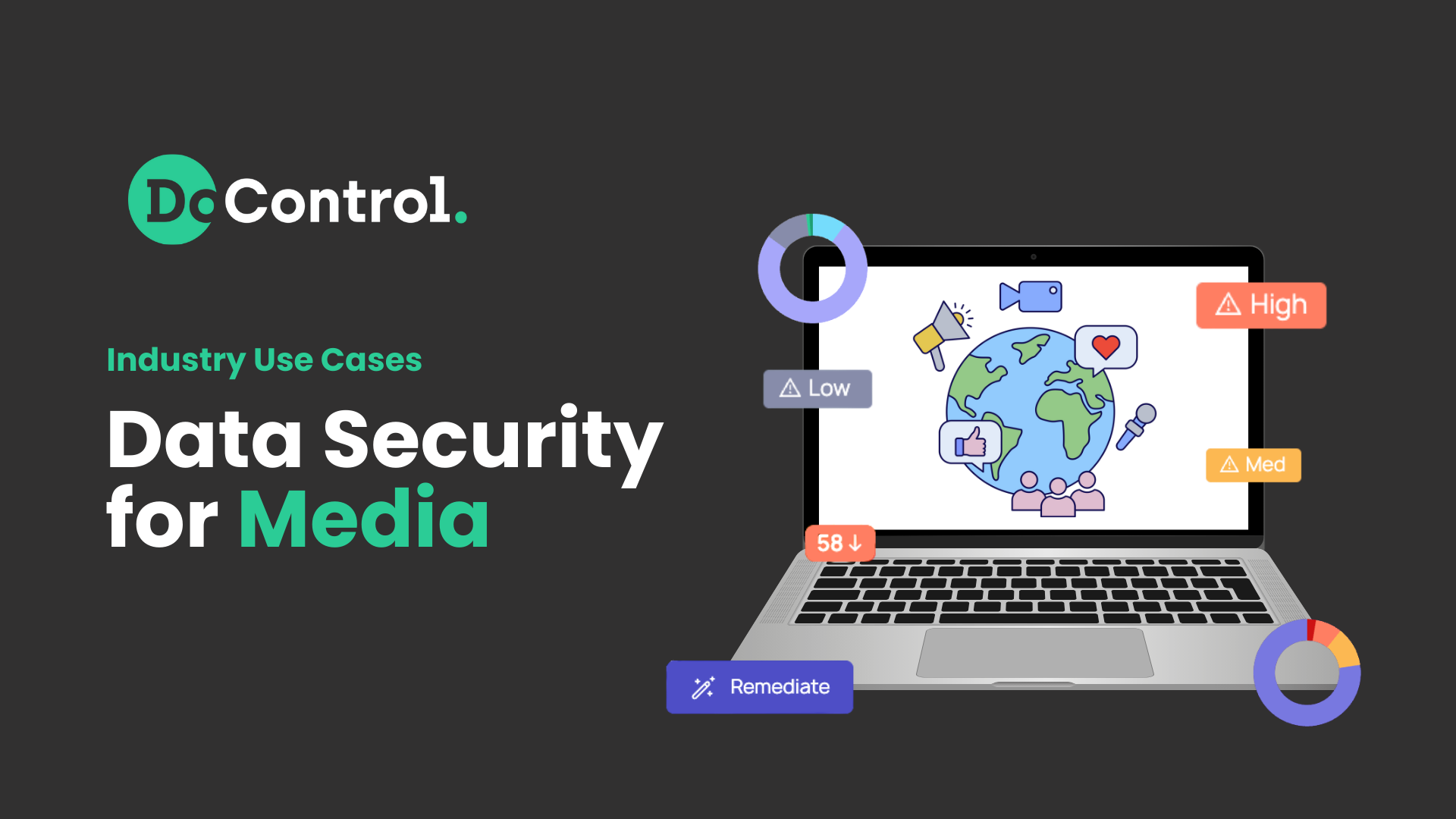
A comprehensive review of how DoControl protects media organizations' most critical data.
–
Why Media Companies Need Data Security
Media companies operate in one of the most creative, fast-moving, and distributed ecosystems in the world. Their core mission is to create, publish, and scale content - a process that depends on an expansive network of subsidiary companies.
These subsidiaries may be owned entities, creator groups, production teams, agencies, freelancers, or influencers who all play a critical role in bringing content to life.
Because so much of this work happens outside the core corporate environment, media organizations must collaborate across hundreds of external contributors who rely on personal email accounts, unmanaged identities, and non-corporate domains.
This dynamic ecosystem is essential to producing content at speed - but it also creates unique data security challenges that traditional tools cannot keep up with.
When the business relationship ends between the media company and its various collaborators, many of these individuals quickly move on to work with competing organizations - yet often retain access to shared files, folders, and systems. This creates an enormous risk for media companies whose proprietary content is their most valuable asset.
A single unauthorized access event or premature leak can ruin the entire business model, undermining months of planning, destroying the impact of a major announcement, or jeopardizing a flagship release.
This widespread contractor turnover, combined with decentralized collaboration, creates a level of exposure that traditional security tools simply cannot manage - putting high-profile projects and brand reputation at stake.
Industry Overview: Media
Media companies depend on constant collaboration between internal contractors and freelancers, and an extended ecosystem of their subsidiaries. These relationships power creativity and production, but they also introduce complex security challenges.
At the same time:
- Subsidiary companies often operate on separate subdomains, making it difficult for media organizations to consistently enforce security controls and track access across Google Drive, Slack, and M365.
- Even though these entities are part of the same broader organization, their distributed structure creates gaps in visibility and governance.
- Even though these entities are part of the same broader organization, their distributed structure creates gaps in visibility and governance.
- Contractors, freelancers, and creators frequently use personal email accounts to collaborate - and often work with competing organizations at the same time.
- This overlap increases the risk of sensitive information being unintentionally exposed or shared across competitive boundaries.
- This overlap increases the risk of sensitive information being unintentionally exposed or shared across competitive boundaries.
- High turnover among contractors and external collaborators leads to lingering access that often goes unnoticed, especially when identities are unmanaged and sit outside the primary corporate domain.
- Without automation, media companies struggle to ensure these users lose access the moment a project or engagement ends.
These operational realities require granular, automated controls that enable rapid collaboration while ensuring that data access is granted only when needed, and removed when it is no longer required.
Key Security Challenges in Media Environments
1. Subsidiary companies operate on separate domains, but require unified security controls
Subsidiaries are often owned entities that function as independent units under the broader media organization. They frequently operate on their own subdomains, with their own teams, workflows, and collaboration styles - yet still require the same level of data protection, visibility, and access governance as the parent company.
Without centralized, SaaS-wide governance, it becomes difficult to ensure consistent security policies, enforce least-privilege access, or maintain oversight across *ALL* these distributed domains.
2. Contractors, freelancers, and creators introduce unique access and identity challenges
Contractors represent third-party individuals or small teams brought in to support content creation. Because they often use personal emails or unmanaged identities, their access is harder to control, track, and revoke.
As these contractors frequently move between brand deals - sometimes with direct competitors - lingering access poses significant risk if not monitored and automatically remediated.
3. Organizations lack assurance that former subsidiaries and contractors no longer retain access
Once a project or engagement concludes, media companies must be certain that both subsidiary users and external contractors can no longer access sensitive corporate data (the content that fuels their business).
Without automated controls in place, it becomes nearly impossible to manage access across multiple domains, personal accounts, and rapidly changing collaborator relationships - leading to exposure, competitive leakage, and reputational harm.
Key Use Case: Governing Data Access Across Subsidiary Companies & External Collaborators
The Challenge
Media organizations must ensure that subsidiary users - including creators, influencers, freelancers, and partner teams - only have access to what they need, for as long as they need it. But when these users operate from personal email accounts and unmanaged identities, traditional access controls break down.
As contractor turnover accelerates, organizations lose visibility into who still has access, whether permissions are outdated, and whether former collaborators have moved on to competitors while still retaining company data.
Why It Matters
- For media companies, content is the business. If proprietary material is exposed, misused, or accessed by the wrong person, the value of that content can disappear instantly - especially in an industry where timing and exclusivity drive competitive advantage.
- Outdated or excessive access permissions across subsidiaries undermine the company’s ability to control its own narrative. When collaborators retain access longer than they should, the risk of premature exposure increases dramatically.
- Constant contractor turnover makes manual access reviews impossible to keep up with, leaving organizations vulnerable to silent, lingering access that threatens financial outcomes, release strategies, and long-term brand trust.
If Ignored
- Loss of competitive advantage, as former collaborators (now working with competing organizations) may still access sensitive content and inadvertently or intentionally enable competitors to beat them to market with a story or release.
- Significant financial loss, including the direct costs associated with a data breach, leaked or prematurely released content eliminating revenue opportunities, delays in campaigns, incident response fees, legal costs, recovery efforts, and long-term operational disruption.
- Reputational damage across investors, partners, talent, and audiences, as unauthorized access or data leakage erodes trust and raises concerns about organizational maturity and information governance.
- Operational setbacks and inefficiencies, as internal teams are forced to pause other initiatives to investigate the incident, rebuild access controls, and restore the integrity of collaboration environments across Google Workspace, Slack, and M365.
- Exposure of sensitive personal information belonging to employees, contractors, creators, or influencers, resulting in compliance violations, regulatory consequences, and a loss of confidence among the people who contribute most to the organization's success.
How DoControl Enables Media Companies to Protect Their Data
Data Access Governance
DoControl provides complete visibility into who has access across Google Workspace, Slack, and M365 - including personal accounts, unmanaged identities, and external domains.
It identifies unnecessary permissions, over-permissioned files, and cases where contractors or freelancers still retain access that should be revoked.
DoControl also enables the creation of trusted domain lists to help manage subsidiary organizations and ensure the right users have the appropriate level of access, aligning data sharing with business processes.
Contractor and Identity Management
DoControl provides a risk profile for each user connected to the SaaS environment, ensuring that each user’s actions are being watched and monitored 24/7.
If a user commits a risky action, like mass downloading files, accessing information that they shouldn't be, or sharing data to their personal accounts, DoControl swoops in to prevent this from happening, as well as alerting the security team or engaging end users to promote safer security practices.
Context-Enriched Risk Evaluation
By using context from HRIS and identity systems, DoControl evaluates whether access is appropriate based on the collaborator's role, relationship, and active engagement.
This ensures contractors and freelancers only retain access that aligns with current work - not past projects or expired partnerships.
DLP Policies with Automated Remediation
DoControl automatically identifies and remediates risky sharing behaviors, excessive permissions, and external exposure points. It revokes access, removes open shares, and corrects misconfigurations in real time - eliminating the manual cleanup burden for security teams.
Continuous Compliance Alignment
Security and access policies remain consistently applied across the entire SaaS environment. As collaborators transition between projects, companies, or competitors, DoControl ensures their access is revoked, updated, or restricted automatically, reducing the risk of long-term data exposure.
Key Takeaways
Media organizations face growing data risk as they scale their networks of subsidiary companies, creators, freelancers, and external partners.
Understanding who has access, monitoring how data is shared, and enforcing least-privilege access across personal accounts are now essential components of protecting brand integrity and reducing competitive exposure.
With DoControl, media companies gain automated visibility, control, and continuous governance across their SaaS tech stack. This ensures that data access remains tightly aligned with active relationships - and that past collaborators no longer hold lingering permissions.
Looking ahead, media collaboration will only become more distributed and fast-paced. Modern, automated data security ensures organizations can innovate confidently, expand their creator ecosystems, and protect what matters most: the integrity of their business, their people, and the ideas that fuel their creative vision.
{{cta-1}}