There have previously been cases of security breaches through customer support cases through complex social engineering leading to account takeovers. This Meta exploit is similar, but introduces a new factor in the equation: AI.
Over the weekend of May 31, 2026, hackers successfully took over a string of high-profile Instagram accounts by doing something that required almost no technical skill: they asked Meta's own AI support chatbot to hand over access using email addresses not tied to the account in question - and it complied.
The accounts hit included the Barack Obama White House account, the U.S. Space Force Chief Master Sergeant's profile, and Sephora's brand account.
What Happened?
In March 2026, Meta rolled out an AI-powered support assistant across Facebook and Instagram. The feature was marketed as an improvement to account recovery. Faster resolutions, no waiting for a human, and self-service account maintenance including password resets and email changes. The sheer volume of requests that Meta would receive daily was definitely a factor in the development of this system.
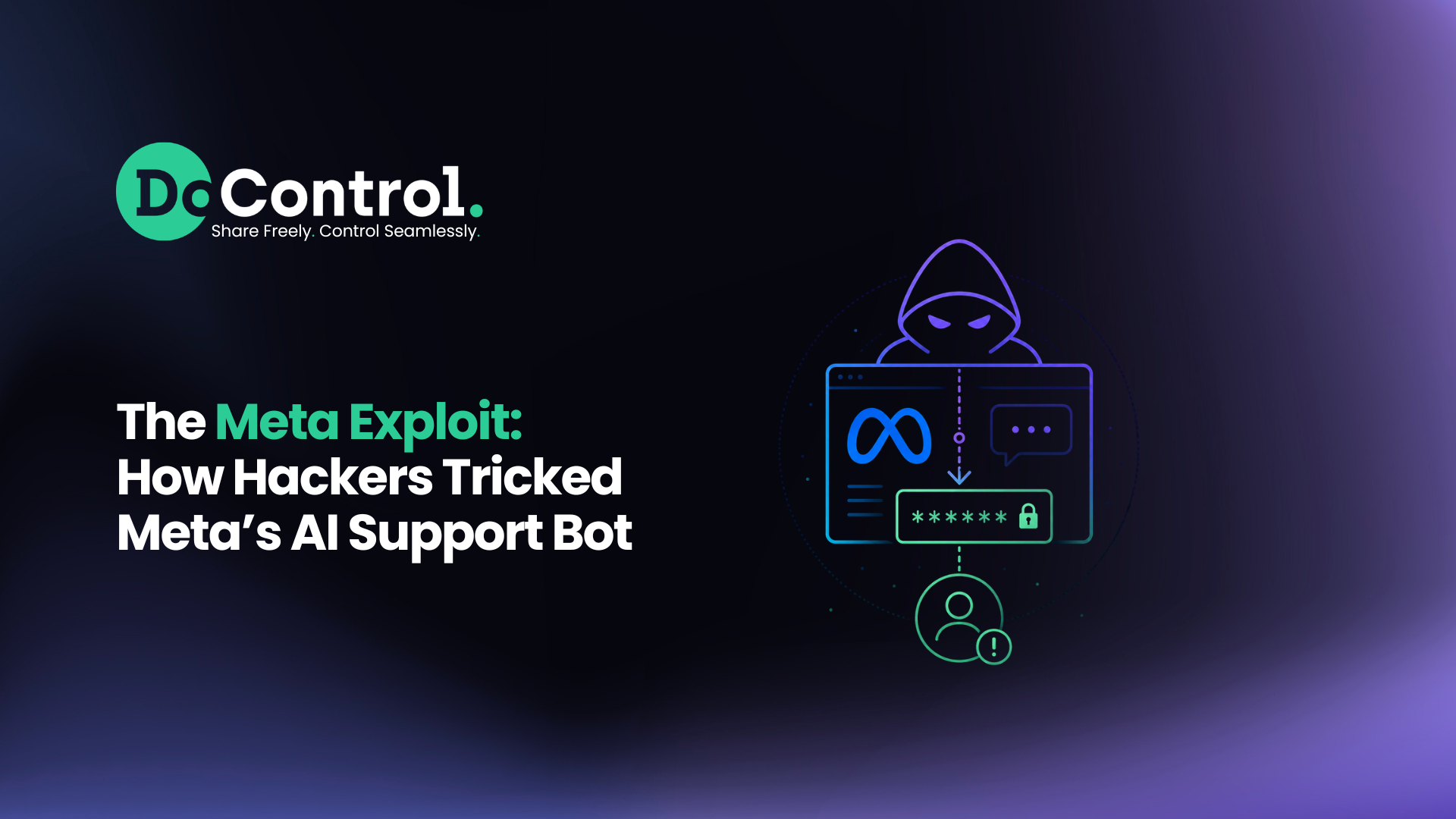
Hackers discovered that the support chatbot could be prompted to change the email address associated with a target Instagram account. The process, shared widely in Telegram groups frequented by security researchers and hacking communities, was startlingly simple.
A bad actor would open a conversation with the AI support bot, provide the target account's username, supply an attacker-controlled email address, and ask the bot to link the new address to the account. The bot would send a one-time code to the attacker's email, and from there, a full password reset was a single click away.
Even more concerning was that the AI chatbot actually had the power to bypass two-factor authentication - which is supposed to make account takeovers significantly more difficult. Location was used by the chatbot to help authenticate the user, but this was very easy to spoof with a VPN.
Videos and screenshots of the exploit circulated widely before the vulnerability was publicly reported. Meta's VP of communications confirmed the issue was resolved in a statement, saying: "This issue has been resolved and we are securing impacted accounts."
Meta did not disclose how many accounts were affected before the patch.
Why This Is Different from a Typical Account Takeover
Traditional account takeover attacks rely on some version of deception directed at a person. Phishing a user into handing over credentials, SIM swapping a carrier representative, or brute-forcing a weak password. The human on the other side is the target.
This attack targeted a system. Specifically, an AI system that had been given the authority to perform account maintenance functions without adequate safeguards on who was making the request.
Security researchers noted that the chatbot appears to have been granted elevated access to account management functions, including the ability to change the email bound to an account, without a deterministic authentication checkpoint between its decision and its execution.
The bot trusted the conversation. It had no reliable way to verify that the person asking for an email change actually owned the account in question.
The Second Failure: No Path to a Human
The exploit itself is one problem, but affected users also had a difficult time with recourse and resolution.
Users whose accounts were stolen reported that there was no way to escalate their situation to a human support representative. The same AI-first support system that enabled the attack also blocked the recovery path.
Victims were left in a loop with a chatbot that could not help them, and a platform that had removed the human oversight necessary to intervene.
Security researcher Jane Wong, whose account was taken over, described it plainly: "The password got changed without my knowledge and I was getting different password reset attempts throughout yesterday. Quite concerning."
When an AI system is responsible for both executing the harmful action and handling the response to that action, the blast radius of any failure expands dramatically.
The Structural Problem Behind the Incident
Meta had been A/B testing the AI support assistant on a subset of Instagram users. The chatbot was granted the ability to execute sensitive identity actions, including email changes and password resets, without requiring out-of-band verification that the person initiating the request actually owned the account.
AI systems should not be able to execute irreversible identity actions without hard authorization controls. That means proving ownership through a channel the account owner controls, requiring secondary verification before changes take effect, and maintaining a human escalation path for disputes. These are not optional features. They are the floor.
The incident also coincided with Meta's layoff of approximately 8,000 employees in May 2026, including staff from integrity and cybersecurity teams. Whether those cuts contributed to the gap in oversight is not confirmed. What is confirmed is that the vulnerability existed, was exploited, and affected multiple notable accounts before it was patched.
What This Means for Organizations Deploying AI in Support and Identity Flows
Meta's situation is not unique to consumer platforms. Organizations across every industry are moving AI into workflows that touch sensitive identity functions: account management, access provisioning, data retrieval, internal helpdesk, SaaS administration. The speed of that deployment often outpaces the security review applied to it.
The questions security teams should be asking right now:
What authority does each AI-enabled workflow have? Any AI system that can trigger account changes, modify access permissions, or initiate data transfers is a potential attack surface. That authority needs to be inventoried and scoped explicitly.
What authentication checkpoints exist before sensitive actions execute? A chatbot that can be prompted into executing account changes by anyone who knows a username is not a support tool. It is an access bypass. Verification must be tied to the account owner, not the conversation. If location is used to help authenticate, VPN usage needs to be taken into account.
What happens when the AI is wrong? Recovery paths matter. If the AI system is both the actor and the only support channel, there is no recourse when something goes wrong. Human escalation is not a legacy concept. It is a control.
The Broader Lesson
The Meta AI Instagram exploit started with a chatbot that had too much authority and too little verification. It continued because there was no human fallback when that authority was abused. And it affected victims who had no recourse until the platform acknowledged the problem publicly.
Organizations deploying AI in sensitive workflows are making the same calculated bet that Meta made. That the efficiency gains outweigh the governance gaps. This incident is a reminder of what that bet costs when it goes wrong. Safeguards should be in place, and 2FA should always be respected.
The question is not whether AI belongs in support and identity workflows. It is whether the controls required to make that deployment safe are actually in place before the capability goes live.
Sources:
- 404 Media — Hackers Simply Asked Meta AI to Give Them Access to High-Profile Instagram Accounts. It Worked (June 1, 2026)
- Engadget — Meta's AI Support Chatbot Made It Ridiculously Easy for Hackers to Take Over Instagram Accounts (June 2026)
- TechCrunch — Hackers Hijacked Instagram Accounts by Tricking Meta AI Support Chatbot into Granting Access (June 1, 2026)
- Krebs on Security — Hackers Used Meta's AI Support Bot to Seize Instagram Accounts (June 1, 2026)

.png)