.png)
Security teams face a growing challenge: the most dangerous threats no longer look like attacks, they look like regular activity.
An employee downloads sensitive files before leaving for a competitor. A compromised Google Drive account quietly accesses confidential data using legitimate credentials. A connected SaaS application begins collecting information it was never intended to access. None of these activities necessarily violate security policies or trigger traditional alerts.
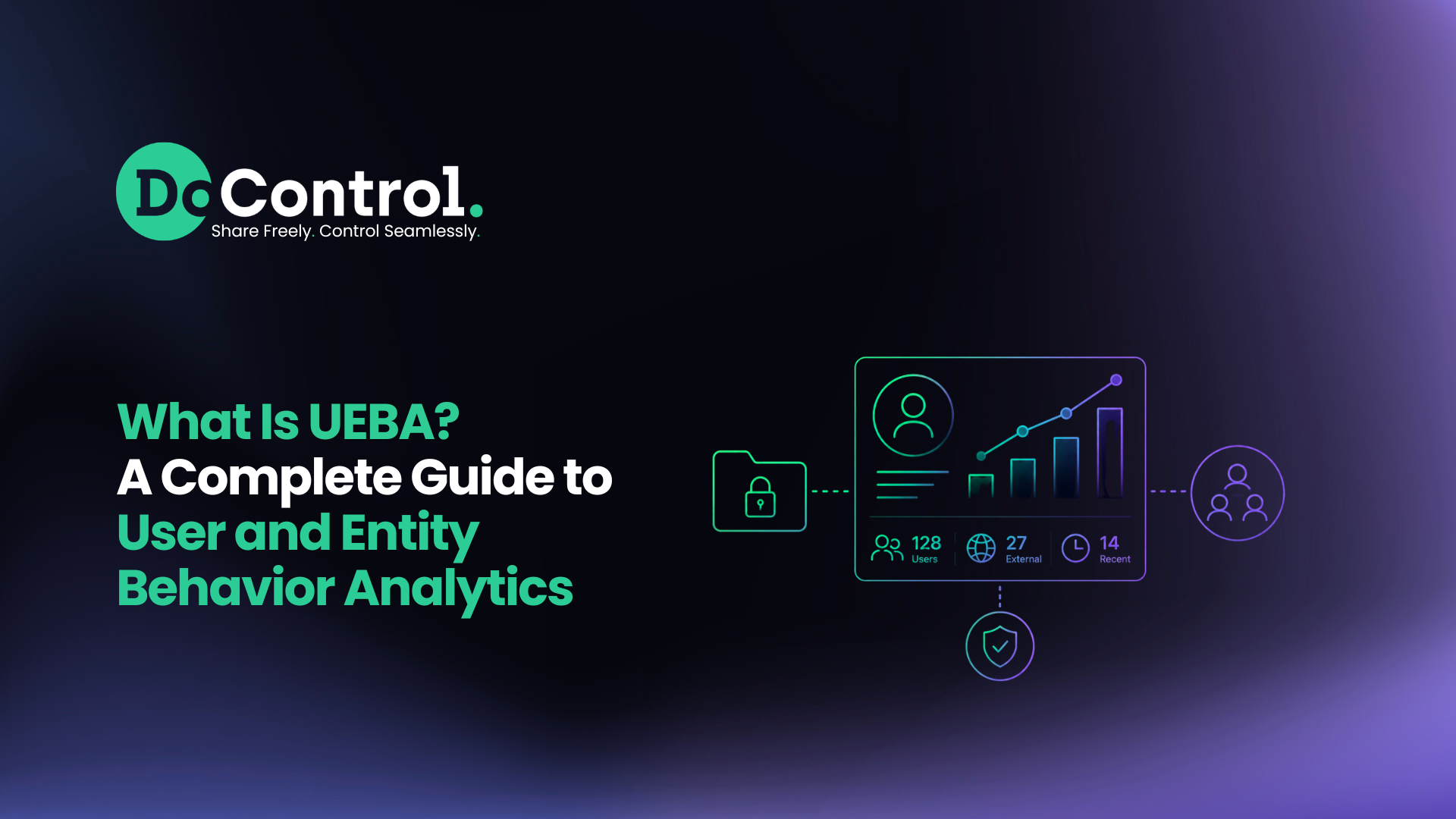
This is why User and Entity Behavior Analytics (UEBA) has become a critical component of modern cybersecurity.
Instead of relying solely on signatures, predefined rules, or known indicators of compromise, UEBA uses machine learning and behavioral analytics to understand what normal activity looks like across users, devices, service accounts, and applications. When behavior deviates from established patterns, UEBA identifies and prioritizes potential threats before they become breaches.
As organizations continue moving sensitive data into SaaS applications like Google Workspace, Slack, Microsoft 365, Salesforce, and Box, behavioral analytics has become one of the most effective ways to detect insider threats, account compromise, and data exfiltration that traditional tools often miss.
🔑 TL;DR – Key Takeaways
User and Entity Behavior Analytics (UEBA) uses machine learning, artificial intelligence, and behavioral modeling to establish baselines for users and entities, then detects anomalies that may indicate insider threats, compromised accounts, privilege abuse, or data exfiltration.
UEBA helps organizations:
- Detect insider threats before data leaves the organization
- Identify compromised accounts using behavioral anomalies
- Uncover privilege abuse and unauthorized access
- Monitor SaaS applications and cloud environments
- Reduce alert fatigue by prioritizing high-risk activity
- Improve threat detection beyond traditional SIEM and DLP tools
What Is User and Entity Behavior Analytics (UEBA)?
User and Entity Behavior Analytics (UEBA) is a cybersecurity methodology that continuously monitors and analyzes the behavior of users and entities across an organization's environment.
The goal is simple:
Understand what normal behavior looks like and identify when something deviates from that norm.
Unlike traditional security controls that rely on static rules, UEBA dynamically learns behavioral patterns over time.
For example:
- An employee on the marketing team typically logs in between 8 AM and 6 PM from New York, New York
- A Salesforce administrator normally accesses sales records, but never exports customer databases
- A service account regularly connects to internal applications, but never interacts with external APIs
When these behaviors suddenly change, UEBA identifies the anomaly and assigns risk based on context.
This allows security teams to detect threats that would otherwise appear legitimate because they use valid credentials and authorized access.
The Three Pillars of UEBA
Modern UEBA platforms analyze three core components:
Users
Human identities including:
- Employees
- Contractors
- Administrators
- Vendors
- Third-party partners
Entities
Non-human actors such as:
- Endpoints
- Servers
- SaaS applications
- APIs
- Service accounts
- Cloud workloads
- Connected OAuth applications
Behaviors
Observable activities including:
- Authentication events
- File access patterns
- Sharing activity
- Privilege changes
- Data downloads
- Application usage
- Administrative actions
By correlating these activities, UEBA creates a behavioral baseline unique to every user and entity.
Why UEBA Matters More Than Ever
Cyberattacks have evolved. Attackers now can break in 4x faster with the use of AI, move from initial access to data exfiltration in as little as 72 minutes.
Hacker groups like ShinyHunters continuously find ways to break into environments by manipulating the employees and users at the world's biggest companies.
The most common entry points for attackers today include OAuth token abuse, third-party application exploitation, SaaS misconfiguration abuse, supply chain compromises, insider recruitment, credential theft, and AI-powered social engineering.
While these attack methods vary, they share a common outcome: they provide threat actors with access to the environment through a trusted identity or application. To security teams, the activity often appears to be coming from a legitimate employee, approved third-party app, or authorized account when, in reality, it is being conducted by a malicious actor. This makes detection significantly more challenging and increases the potential for data loss, operational disruption, and financial harm.
Recent attacks by notorious groups linked to ShinyHunters – such as UNC6040 and UNC6395 – successfully gained access by exploiting identity and authentication workflows rather than traditional infrastructure vulnerabilities.
This creates a significant challenge for security teams.
If a user logs in with valid credentials, most security controls assume the activity is legitimate.
UEBA challenges that assumption.
Rather than asking:
"Is this login authorized?"
UEBA asks:
"Is this behavior normal?"
That distinction enables organizations to detect:
- Stolen credentials
- Insider threats
- Account takeovers
- Privilege abuse
- SaaS-based attacks
- Data exfiltration attempts
before significant damage occurs.
How UEBA Works
UEBA operates through four primary stages:
1. Data Collection
UEBA platforms ingest data from across the security stack, including:
- HRIS systems (Deel, BambooHR, HiBob)
- Identity providers (Okta, Entra ID)
- SaaS applications
- SIEM platforms
- Endpoint detection tools
- Firewalls
- Network telemetry
- Email platforms
This broad visibility enables comprehensive behavioral analysis.
2. Behavioral Baselining
Machine learning algorithms analyze historical activity to establish normal patterns.
Examples include:
- Typical login times
- Common locations
- Frequently accessed files
- Department-aligned access activity
- Standard sharing behavior
- Normal data transfer volumes
Every user receives an individualized baseline.
3. Anomaly Detection
Once baselines are established, UEBA identifies deviations such as:
- Impossible travel events or geolocation events
- Excessive file downloads
- Unusual administrative actions
- New external sharing activity
- Unexpected OAuth application access
These anomalies may indicate malicious behavior even when permissions appear valid.
4. Risk Scoring
Rather than generating alerts for every anomaly, UEBA assigns risk scores based on behavioral context.
For example, a finance executive in Los Angeles may routinely share 20 files with an external auditor in San Francisco during tax season. While the activity involves sensitive data and external sharing, it aligns with established business patterns and would likely be considered low risk.
Now consider a different scenario: the same finance executive's account is suddenly accessed from China and used to share 20 files with an unfamiliar recipient in Germany. Even though the number of files shared is identical, the combination of unusual geolocation, atypical recipient behavior, and deviation from historical patterns significantly increases the risk score and may trigger a high-priority alert or remediation workflow.
This contextual approach is what makes UEBA effective. Rather than evaluating individual actions in isolation, it analyzes multiple signals together to determine the likelihood of malicious activity. Risk scoring helps security teams focus on the incidents that matter most, reducing alert fatigue and accelerating threat detection.
Contextual UEBA vs. Traditional Security Tools
Many organizations already use traditional, legacy security tools that leave them with critical gaps when it comes to protecting their sensitive SaaS data.
Traditional tools answer:
"Did a policy get violated?"
UEBA answers:
"Does this behavior make sense in context?"
Organizations need both perspectives to effectively manage risk.
Common UEBA Use Cases
Insider Threat Detection
One of the most valuable UEBA applications is identifying risky employee behavior.
Examples include:
- Employees downloading unusually large volumes of files
- Sharing sensitive documents externally
- Forwarding corporate information to personal accounts
- Accessing repositories outside their normal responsibilities
These activities often precede intellectual property theft and data loss incidents.
Compromised Account Detection
Credential theft remains one of the most common attack vectors.
UEBA detects signs such as:
- Logins from unusual geographies
- Impossible travel events
- Atypical application access
- Sudden spikes in privileged actions
These indicators often reveal account compromise before attackers achieve their objectives.
Data Exfiltration Detection
UEBA helps identify:
- Bulk downloads
- Mass file sharing
- Unusual exports
- Data transfers to unauthorized destinations
This is particularly valuable in SaaS environments where external sharing is often a legitimate business process.
Privilege Abuse
Administrators and privileged users represent significant risk if compromised.
UEBA can identify:
- Unusual administrative actions
- Unauthorized access to sensitive systems
- Excessive permission changes
- Suspicious privilege escalation activity
Third-Party and OAuth Application Risk
Connected applications increasingly create security blind spots.
UEBA helps detect:
- Excessive API usage
- Unauthorized application access
- Abnormal data collection behavior
- Suspicious third-party integrations
How DoControl Extends UEBA for Modern SaaS Security
UEBA is incredibly effective at answering one question:
"Is this behavior unusual?"
But modern SaaS security requires security teams to answer two additional questions:
"What data is actually at risk?" and "What should happen next?"
This is where many traditional UEBA platforms fall short.
A behavioral anomaly by itself doesn't tell security teams whether the activity involves sensitive customer records, intellectual property, financial data, or a harmless spreadsheet. It also doesn't reduce risk unless someone investigates the alert manually and takes action.
DoControl bridges this gap by combining behavioral analytics with:
- Data Access Governance
- Identity Threat Detection and Response (ITDR)
- SaaS Data Loss Prevention (DLP)
...all across the SaaS applications where business-critical data lives.
Instead of simply identifying unusual behavior, DoControl continuously evaluates:
- Who is accessing the data?
- What are they doing with it?
- Does that data access make sense in context? (role, scope, department, etc.)
This contextual approach allows security teams to prioritize real risks rather than chasing isolated anomalies.
Purpose-Built for SaaS Environments
Most traditional UEBA platforms were designed for networks, endpoints, and on-premises infrastructure.
Modern organizations operate differently. Sensitive information is now distributed across platforms such as:
- Google Workspace
- Microsoft 365
- Salesforce
- Slack
- Box
- Dropbox
- Zoom
At the same time, employees increasingly collaborate with external partners, contractors, customers, AI assistants, and connected SaaS applications.
DoControl was built specifically for this reality. Through direct SaaS integrations and API-level visibility, the platform continuously monitors user activity, data sharing, OAuth applications, identities, and permissions across business-critical SaaS ecosystems.
This enables organizations to detect SaaS-specific risks that traditional security tools often miss, including:
- Suspicious external sharing
- Excessive file downloads
- Abnormal SaaS administrator activity
- Risky OAuth application behavior
- Privilege escalation
- Sensitive data exposure
- AI-driven data access risks
- Insider-driven data exfiltration
From Detection to Automated Remediation
The biggest limitation of many UEBA solutions is that they stop at alerting.
Security teams receive a notification and then must manually investigate, determine business impact, and execute remediation.
DoControl takes a different approach.
When risky behavior is detected, organizations can automatically trigger remediation workflows that match the severity and context of the threat. Depending on policy, DoControl can:
- Remove risky external sharing permissions
- Revoke unauthorized access
- Quarantine sensitive files
- Notify managers and data owners
- Launch approval workflows
- Enforce least-privilege access controls
- Reduce historical exposure at scale
This transforms UEBA from a detection capability into a risk reduction engine.
Beyond Behavioral Analytics: Reducing Historical Exposure
Behavioral analytics excels at identifying emerging threats.
However, some of the largest SaaS security risks already exist before suspicious behavior occurs.
Examples include:
- Overshared files
- Publicly exposed documents
- Excessive permissions
- Dormant external collaborators
- Unused but highly privileged applications
- Legacy access that was never removed
Because these risks may not generate anomalous behavior, they often remain invisible to standalone UEBA tools.
DoControl continuously discovers, classifies, and maps SaaS data exposure so security teams can identify and remediate historical risk alongside real-time behavioral threats. This combination of visibility, governance, and behavioral intelligence helps organizations significantly reduce their SaaS attack surface.
The Future of UEBA Is Context-Aware SaaS Security
As organizations embrace AI-powered collaboration, SaaS sprawl, and increasingly distributed workforces, security teams need more than anomaly detection.
They need visibility into identities, data, permissions, sharing activity, connected applications, and user intent.
DoControl delivers this by combining UEBA-driven behavioral analytics with Data Access Governance, Insider Risk Management, Identity Threat Detection & Response, SaaS DLP, and automated remediation in a unified platform built for the SaaS-first enterprise. The result is faster threat detection, reduced data exposure, and proactive protection against insider threats, account compromise, and SaaS-based data loss.
{{cta-1}}