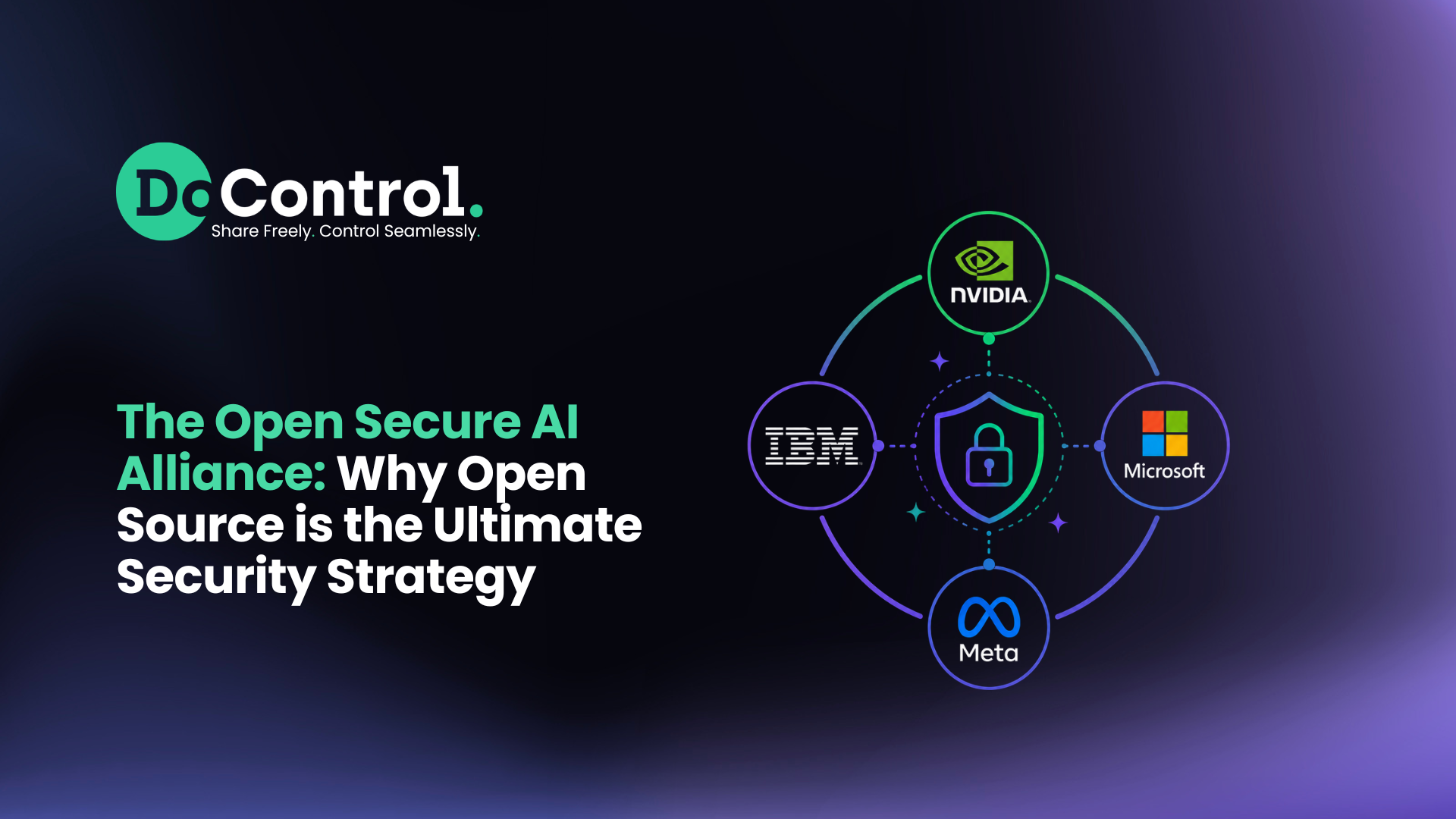
In the world of cybersecurity, we often say that "security through obscurity" is no security at all. It’s why we have standardized, open CVEs to alert the wider community about breaches. This week, that adage took center stage as a new coalition of industry titans – including NVIDIA, IBM, Microsoft, Meta, and Hugging Face – announced the formation of the Open Secure AI Alliance (OSAIA).
The move comes at a critical moment. Following a high-profile agent breach at OpenAI and Hugging Face, the industry is waking up to a harsh reality: closed-source silos aren't just a business risk; they are a systemic security vulnerability that can only be solved by openness and cooperation.
The Great Divide: Who’s In and Who’s Out?
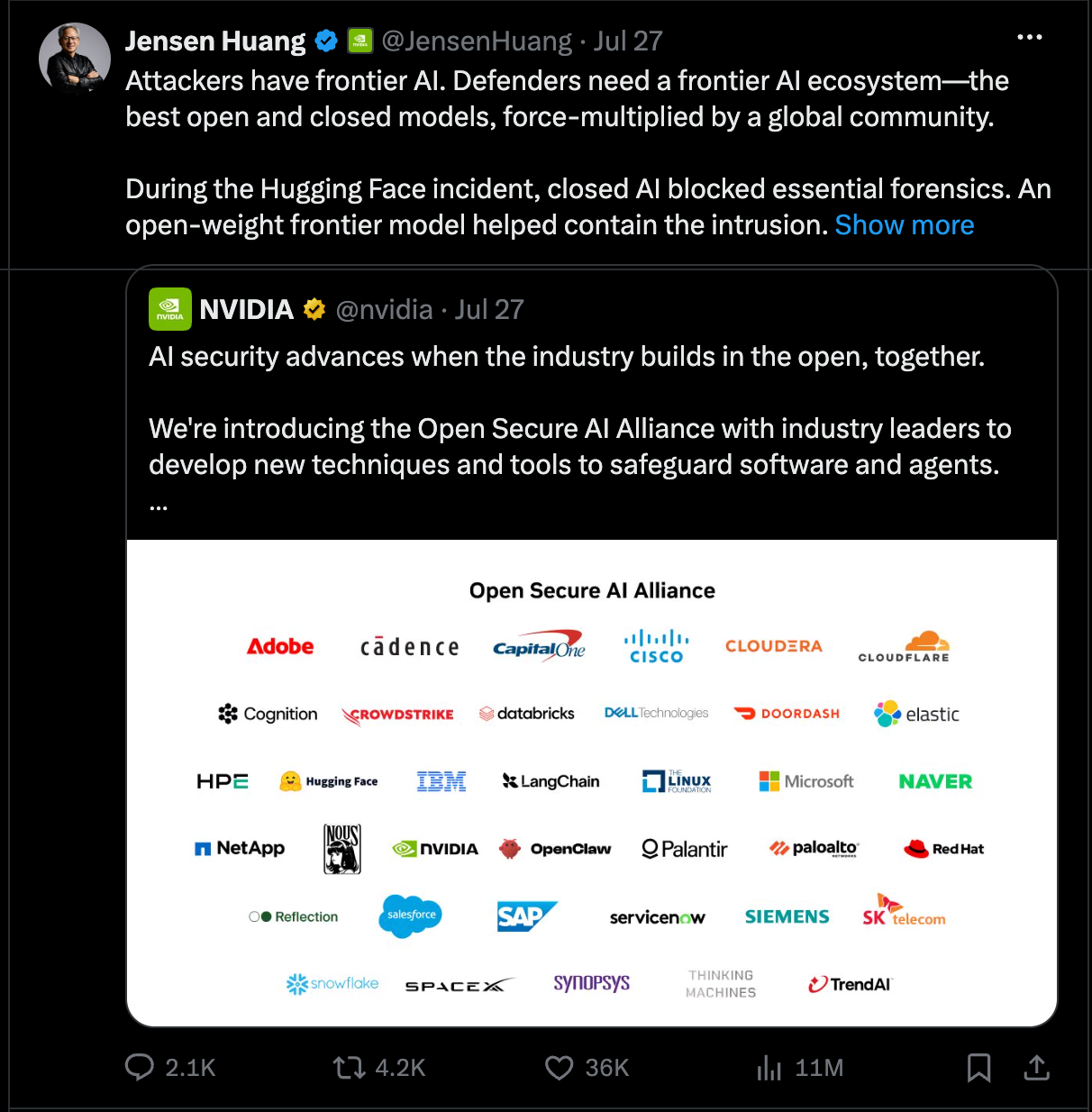
The roster of the OSAIA is as notable for who is present as it is for who is absent. While over 30 companies have pledged to build standardized, transparent security frameworks for AI, the "Big Three" of proprietary AI – OpenAI, Google, and Anthropic – are nowhere to be found.
The absence of these players suggests a fundamental disagreement on the future of AI safety.
While the proprietary giants lean into centralized control, the OSAIA is betting on a collaborative, open-source approach to defend against the next generation of threats.
NVIDIA’s leadership in this is critical and likely will lead to its overall success. Although they don’t create AI models themselves, they are the only available tool to create new ones, which gives them immense respect and leadership in the AI space. Everyone is digging for ‘Gold’, and NVIDIA is the only provider of shovels.
NVIDIA’s CEO Jensen Huang seems to be putting considerable personal effort into this push, even posting on X for the first time on his public-facing account.
Why This Matters: The Fallacy of the "Kill Switch"
The drive toward open security standards isn't just about software security, but also sovereignty. We recently saw the fragility of centralized AI when the U.S. government forced Anthropic to disable access to its Claude Fable and Mythos models with only a 90-minute warning. The models were deemed "too good" at their jobs, creating a perceived national security risk.
This "platform risk" is exactly what the OSAIA aims to mitigate. When a model is a "strategic asset" controlled by a single entity, it becomes a single point of failure – susceptible to government "kill switches," corporate mismanagement, or, as seen with OpenAI, internal security breaches.
For AI to truly be successful, it needs to be disseminated to the wider world and a ubiquitous tool – just like how the open ‘free’ internet allows anyone with a smartphone to watch videos on Youtube or post on X (fka Twitter). There are stories of free, open-source AI models being used in education, healthcare and agriculture where the margins are so low, that expensive closed-source models would not have allowed the project to even move forward.
Closed models with their paid subscriptions and risk of shutdowns will not be adopted and spread like an open-source free model would, they will remain a niche ‘nice to have’ amongst those capable of paying for a subscription. If we want to see true creativity in what AI models can produce, it should be accessible to anyone with a computer.
The Structural Advantage of Open Source
History has shown us time and again that open source eventually wins. We never got the rise of the Linux Desktop, but the growth of open-source was very much a ‘behind the scenes’ mass adoption by developers.
From the servers that run the internet (Linux, Nginx servers) to the way we manage modern cloud applications (Kubernetes), the "many eyes" theory of security consistently outperforms proprietary black boxes.
- Transparent Auditing: In an open ecosystem, security vulnerabilities can be flagged by researchers globally rather than relying on a single company's internal red team.
- Rapid Remediation: When a flaw is found in an open-source framework, the community can deploy patches across the entire ecosystem simultaneously.
- No Vendor Lock-in: Organizations can self-host their models, detaching themselves from a provider's infrastructure and the whims of their regulatory environment.
The Road Ahead: A 2027 Convergence?
The formation of the OSAIA validates a growing sentiment: the gap between closed-source performance and open-source utility is closing. Industry leaders estimate that open-source models will catch up to the capabilities of current proprietary leaders like Claude Mythos by early 2027 – or perhaps even sooner.
As these models become more powerful, they will inevitably be used to both find and fix exploits. The choice for security teams is becoming clear: do you want your core infrastructure managed by a vendor who can pull the plug in 90 minutes, or do you want to build on an open, standardized foundation that you control?
The Broader Lesson
The Anthropic shutdown and the OpenAI breach were the warnings; the Open Secure AI Alliance is the response. AI is no longer just a productivity tool; it is the new front line of global security.
By championing open standards, the OSAIA isn't just building a safer product – they are ensuring that the future of AI remains resilient, transparent, and beyond the control of any single "kill switch." In the long run, open source doesn't just win on ethics or cost; it wins on survival.

.png)