.png)
The recent SOC 2 fraud scheme has sparked understandable concern across security teams and GRC teams alike - especially those operating in SaaS ecosystems.
Headlines have focused on fake SOC 2 reports, unethical audit firms, and compliance platforms that approved reports without actually checking security controls.
All of that matters.
But it’s not the most important part of the story.
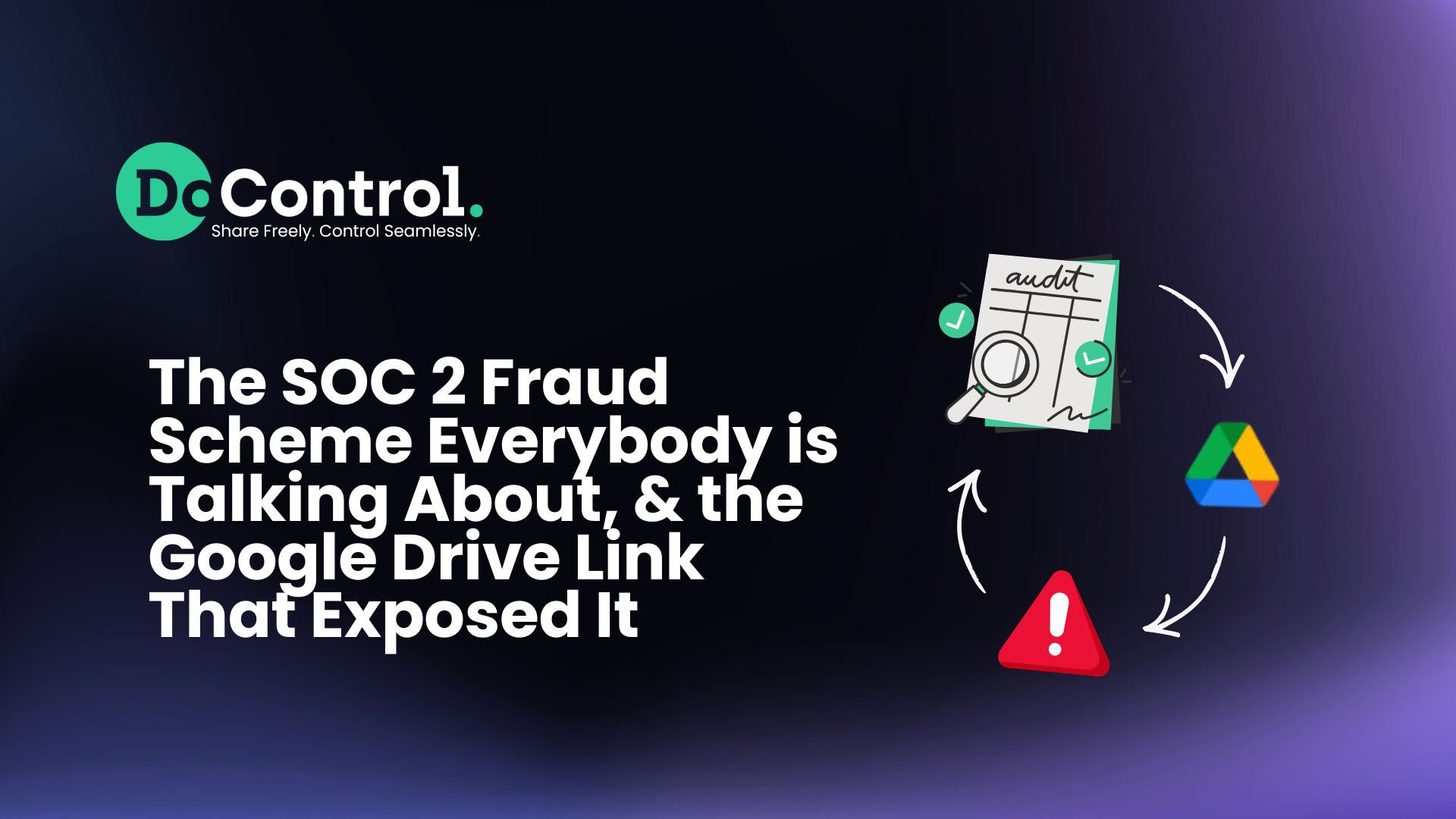
The incident didn’t become public because of a breach, an advanced hacker group, or a whistleblower investigation. It surfaced because an internal Google Spreadsheet was accidentally shared with “anyone with the link” sharing permissions. That document was indexed, archived, and is now permanently available on the internet.
The compliance fraud was the spark.
Uncontrolled SaaS data sharing is what turned it into lasting damage.
What happened in the SOC 2 fraud scheme?
For those who haven’t followed the details closely, here’s what we know so far:
A compliance automation platform allegedly worked with audit firms to produce SOC 2 reports at scale. Instead of running real audits, the platform reportedly used automated templates to create nearly identical reports for several different companies.
The reports were then approved by audit firms without properly checking key security controls. As a result, companies ended up with SOC 2 reports that looked legitimate, even though the controls behind them may not have existed or been enforced.
The scheme came to light after an employee of the automation platform mistakenly shared a Google Docs link in a Slack channel. That link led to a publicly accessible spreadsheet listing:
- Implicated companies
- Contact information
- Direct links to the now-discredited SOC 2 reports
Once discovered, the document was taken down - but by then, it had already been cached and preserved online. Forever.
Clarifying the situation: what this truly means
Before jumping to conclusions, it’s important to clarify a few things.
SOC 2 itself is not broken.
SOC 2 remains a legitimate and valuable framework for evaluating all aspects of a company's information security program, including:
- Governance
- Risk
- Compliance
- Operations
- Incident Response
- Vulnerability management
- Secure architecture and application development
The failure here was not the framework, it was how people chose to exploit trust in the process and not do a thorough audit based on evidentiary controls.
This was also not primarily a technology failure. Automation didn’t cause fraud. Poor incentives, lack of auditor independence, and shortcut-driven compliance culture did.
And finally, this wasn’t exposed by elite security detection.
It was exposed by a basic SaaS / file sharing mistake.
That distinction matters - because it points to a much larger, systemic issue that goes far beyond SOC 2.
The REAL problem: public sharing in Google Drive is a PERMANENT risk
The most consequential detail of this incident isn’t the fake audits.
It’s the fact that an internal Google Drive document (that was never supposed to be seen by the public!!!) was shared and accessible to anybody in the world with the link - and could not be meaningfully “unshared” once discovered.
This is the uncomfortable reality of modern SaaS collaboration:
- “Anyone with the link” can expose sensitive data with a single click
- Links spread instantly through Slack, email, chat, and browsers
- Search engines & archiving services index content faster than teams can respond
- Once a link is shared, it can’t truly be taken back
- Once confidential data is exposed, you can’t undo who accessed it
Once sensitive data is publicly accessible, time works against you.
Even if:
- The link is revoked
- Permissions are fixed
- The document is deleted
The exposure may already be permanent.
This is not unique to this incident. Google Drive, and Google Workspace more broadly, is where sensitive business information actually lives today:
- Security reviews
- Compliance evidence
- M&A strategy discussions
- Penetration tests
- Vulnerability scans
- Customer data exports
- Internal investigations
Yet, most organizations still rely on:
- Manual reviews
- Periodic audits
- End-user judgment
to manage data sharing at a massive scale with insanely large volumes of data.
THIS gap - not fake compliance reports - is what made this story explode.
What companies and the market truly need now
This incident highlights a truth many security teams already feel but struggle to articulate:
Trust has shifted from documents to data flows.
For years, organizations relied on artifacts - SOC reports, PDFs, questionnaires - to secure their organizations. But these don’t control access. They don’t stop oversharing. And they don’t expire when links leak.
What companies actually need now are capabilities that reflect how work ACTUALLY happens in SaaS environments:
1. Continuous visibility into SaaS data sharing
It comes down to basic data access governance. Security teams need to know:
- Who is sharing what
- With whom they are sharing with
- Why they’re sharing that
- Whether access is simply internal or also external
- Whether that share aligns with true business intent (or if its risky)
2. Context-aware controls
Not all sharing is bad. Blocking everything breaks the business, and people need to get their work done.
Effective SaaS security - and SaaS DLP - requires:
- Understanding ownership and who absolutely needs to be shared on that data
- Knowing which data needs to be shared, vs which data is absolutely confidential
- Applying controls that reflect real-world workflows and support business continuity
3. Fast, targeted remediation
When exposure happens, response must be:
- Immediate
- Precise
- Non-disruptive (!!!!)
This is where traditional CASB and DLP tools often struggle. Vendors like Netskope, Forcepoint, and Zscaler have laid critical groundwork for cloud security - but many of these tools were designed for perimeter-era assumptions and lack the business context required for modern SaaS collaboration.
SaaS data security today requires tools built specifically for:
- Collaboration-first SaaS environments
- Real-time user behavior and sharing practices
- Business-aware policy enforcement
This is where platforms like DoControl come into focus - addressing the reality that data sharing is now the dominant risk vector in the industry.
Where the security industry needs to go from here
The SOC 2 fraud scheme should be a wake-up call - but not for the reasons most people think.
At the SOC and compliance level, the industry needs:
- Stronger auditor accountability
- Less “guaranteed pass” marketing
- More emphasis on operational evidence, not documentation speed
But compliance reform alone won’t prevent the next incident.
At the data security level, organizations must accept that:
- SaaS sharing is irreversible once exposed
- 95% of security incidents are because of human error - you can actually count on it happening
- ‘Prevention’ only works if you *actually* prevent exposure…and remediation has to happen happen before links go public
The future of security will be built on continuous control of how data moves inside SaaS platforms.
This incident didn’t fail loudly.
No alarms went off.
No attacker broke in.
A single sharing setting did the damage.
That’s the world security teams are operating in now - and it’s time the industry, regulators, and vendors evolved accordingly.
Sources:
https://www.linkedin.com/posts/troyjfine_details-have-emerged-regarding-a-widespread-activity-7415043499676483584-nI5Z/?utm_source=share&utm_medium=member_ios&rcm=ACoAAAGdWvEBNsln8SkhTDl-KZDO-RTB03bafJk