.png)
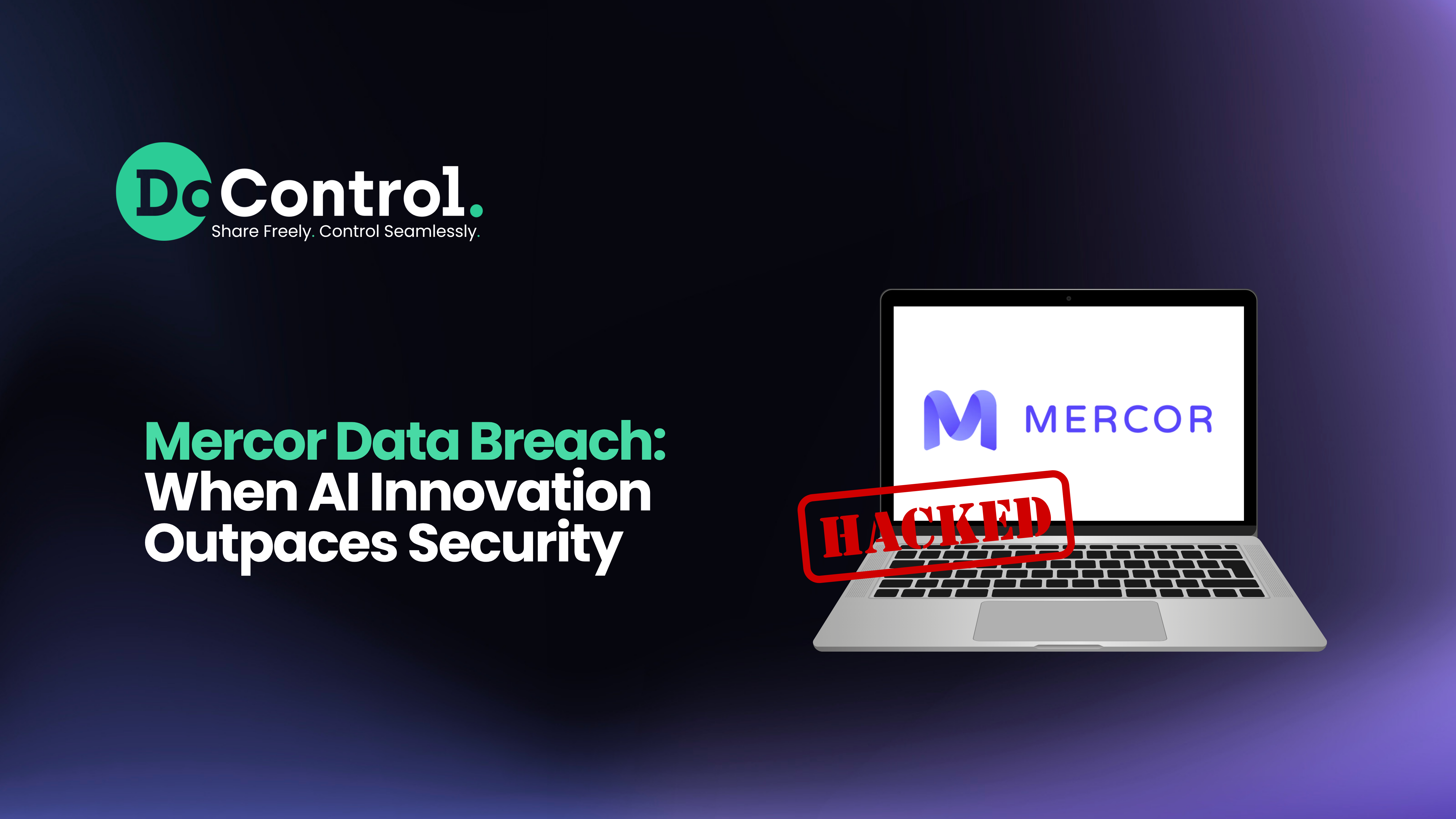
Mercor - an up-and-coming AI startup that recently raised $350 million in series C and is now valued at $10 billion dollars - is now facing a major security crisis.
The company disclosed a data breach tied to the widely used open-source AI tool LiteLLM, setting off a chain reaction that quickly escalated. Hackers reportedly exfiltrated 4TB of sensitive data, including PII, candidate profiles, employer data, source code, and API keys.
What started as a brief compromise turned into a snowball attack. Stolen credentials enabled access to additional systems, expanding the breach far beyond its initial entry point.
The fallout has been immediate and significant. Meta has reportedly paused its contracts, while OpenAI and other AI leaders who were using Mercor are assessing their exposure. At the same time, lawsuits have been filed, and scrutiny has spread across the broader ecosystem - including LiteLLM and compliance vendor Delve.
Mercor is an American artificial intelligence hiring startup that provides experts to train AI models and chatbots. Like many AI data training companies, Mercor is entrusted with highly sensitive assets: proprietary datasets and the unique methodologies big AI companies (Meta, OpenAI) use to train their models.
The value of this work is so high that even after Meta invested $14.3 billion into competitor Scale AI, it still maintained its relationship and invested in Mercor.
Unfortunately, this isn’t the first time we’ve seen this pattern. The Scale AI data breach that happened last year highlighted how exposure of AI training data can put major players like Meta and OpenAI at risk - proving that in today’s AI supply chain, one weak link can impact the entire ecosystem.
What happened in the Mercor data breach?
On March 31, Mercor disclosed that it had been impacted by a data breach - marking the start of what has quickly become a high-impact security incident.
A hacker group claimed to have exfiltrated 4TB of data from Mercor’s systems. The confirmed reportedly stolen data includes:
- candidate profiles (as it is a hiring platform)
- personally identifiable information (PII)
- employer data
- proprietary source code
- API keys
While Mercor has not confirmed the full scope of the data exposure, the company has stated that it is actively investigating and communicating with affected customers and contractors.
The root cause traces back to a compromise of LiteLLM, a widely used open-source AI tool embedded in many development workflows. For a brief window - approximately 40 minutes - the tool contained credential-harvesting malware designed to capture user login information.
That short window was enough.
Once initial credentials were compromised, attackers were able to gain access to additional systems and applications. From there, the breach expanded through a cascading effect - using newly accessed accounts to extract more credentials, move laterally, and deepen access across the environment.
This wasn’t just a single point of failure. It was a chain reaction - one that highlights how quickly risk can escalate in interconnected AI and SaaS ecosystems without continuous monitoring and control.
How the breach unfolded, and why AI-driven environments are at risk
At its core, this was a supply chain attack. But what makes this incident particularly concerning is how it played out in an AI-driven environment.
AI ecosystems are fundamentally different from traditional IT stacks:
1. Deep dependency on third-party and open-source tools
AI development relies heavily on tools like LiteLLM, APIs, plugins, and external datasets. These integrations are often deeply embedded into workflows, making them difficult to monitor, harder to secure, and key targets for hacker groups.
2. High-value, high-sensitivity data
AI systems are powered by data - often proprietary, sensitive, or regulated. Training datasets, prompts, model outputs, and fine-tuning pipelines represent critical intellectual property - and hackers want to get their hands on them any way they can.
3. Credential sprawl and over-permissioning
AI tools frequently require broad access to data stores, APIs, and internal systems. When credentials are compromised, attackers can quickly escalate privileges and move laterally, creating a domino effect of damage.
4. Lack of continuous oversight
Most organizations still rely on point-in-time security reviews or static compliance checks. But in dynamic AI environments, risks evolve in real time - especially as new tools and integrations are constantly introduced by employees.
The real-world impact of breaches like this
Breaches like Mercor’s aren’t just technical incidents, they’re business events with far-reaching consequences.
1. Lost partnerships and revenue risk
When trust is broken, partners act quickly. They’re quick to cut or pause contracts. Investors lose faith, and can pull out all together. Meta’s reported pause on their contract with Mercor mirrors what we saw in the Scale AI incident - where exposure risks forced major AI companies to reassess vendor relationships.
2. Legal and regulatory exposure
With PII involved, lawsuits were inevitable. As AI regulations evolve globally, organizations can expect increased scrutiny and higher penalties for governance failures. Not only was customer data put at risk, but their vendor data was too. 5 of Mercor’s contractors have already filed lawsuits over their alleged personal data exposure. In an ecosystem such as this, there is simply no room for mistakes (or security gaps).
3. Intellectual property leakage
In the AI industry, the data itself is your competitive edge. Each model, company, application, and entity competes with each other relentlessly - trying to get ahead with their intelligence and capabilities. Exposure of training datasets, models, or pipelines can erode differentiation overnight and dismantle a company altogether.
4. Ecosystem-wide fallout
This incident didn’t stop at Mercor. Vendors like LiteLLM - and even compliance providers (like Delve) - were pulled into the spotlight, reinforcing how interconnected today’s AI supply chain truly is.
What companies need today to prevent this type of data breach
The takeaway isn’t to slow down AI adoption - it’s to secure it properly. That means moving beyond traditional security approaches and embracing modern governance strategies built for AI and SaaS environments.
1. AI data governance
Organizations need clear visibility into where AI-related data lives, how it’s used, and who has access to it. Additionally, organizations need to know what types of AI is touching their sensitive data. They need to know:
- Where their data is at all times
- Who is accessing it, viewing it, sharing it, downloading it, etc.
- Whether or not a human is accessing it, or a non human (NHI’s, AI agents, service accounts, etc.)
They also need ways to:
- Monitor what AI tools, systems, third-party apps, or vendors are touching their data
- Detect when there is anomalous behavior happening in the environment
- Prevent unauthorized sharing or exfiltration by seting up automated remediation workflows
2. Data access governance
Similar to the last point, data across the environment must be governed continuously and at scale. Credential theft was both the entry point - and the amplifier - of this breach. Because of this, organizations need to:
- Enforce least privilege access across all systems, apps, tools, and users
- Continuously audit, update, and right-size permissions
- Detect abnormal access patterns, sharing events, and download events in real time
- Set up automated remediation workflows that prevent exfiltration in real time
3. AI app and third-party governance
AI environments rely on a growing ecosystem of tools and integrations - each introducing potential risk. These apps are oftentimes integrated or added to the environment by employees who aren’t thinking about the security risks behind them. Because of this, organizations need to:
- Continuously monitor third-party apps and open-source tools
- Assess risk of third-party apps continuously and dynamically, not just during onboarding
- Detect anomalous behavior across connected applications
- Consistently track what permissions these apps have and what data they can access
- Set up automated remediation workflows that contain or revoke access from these apps
4. Automated remediation
Speed is critical. In this case, a 40-minute window led to massive downstream impact. Had this event been caught the second the hackers made their way in, the waterfall effect that caused the most damage never would've happened. Companies need a SaaS security platform that can:
- Instantly revoke compromised credentials
- Automatically quarantine risky applications
- Trigger real-time responses and remediations to suspicious activity
- Engage SecOps or incident response teams the second there is an issue
- Set ongoing policies so that this type of exfiltration is contained at scale
Conclusion
The Mercor breach is a clear signal: AI innovation without governance is a risk multiplier.
As organizations continue to embrace AI, they must also evolve how they secure it. That means shifting from reactive security to proactive, continuous governance - spanning data, access, applications, and vendors.
Because in today’s environment, it’s not just about building smarter systems, it’s about ensuring they’re secure, resilient, and trusted.
Sources:
https://www.businessinsider.com/mercor-lawsuits-data-breach-2026-4