.png)
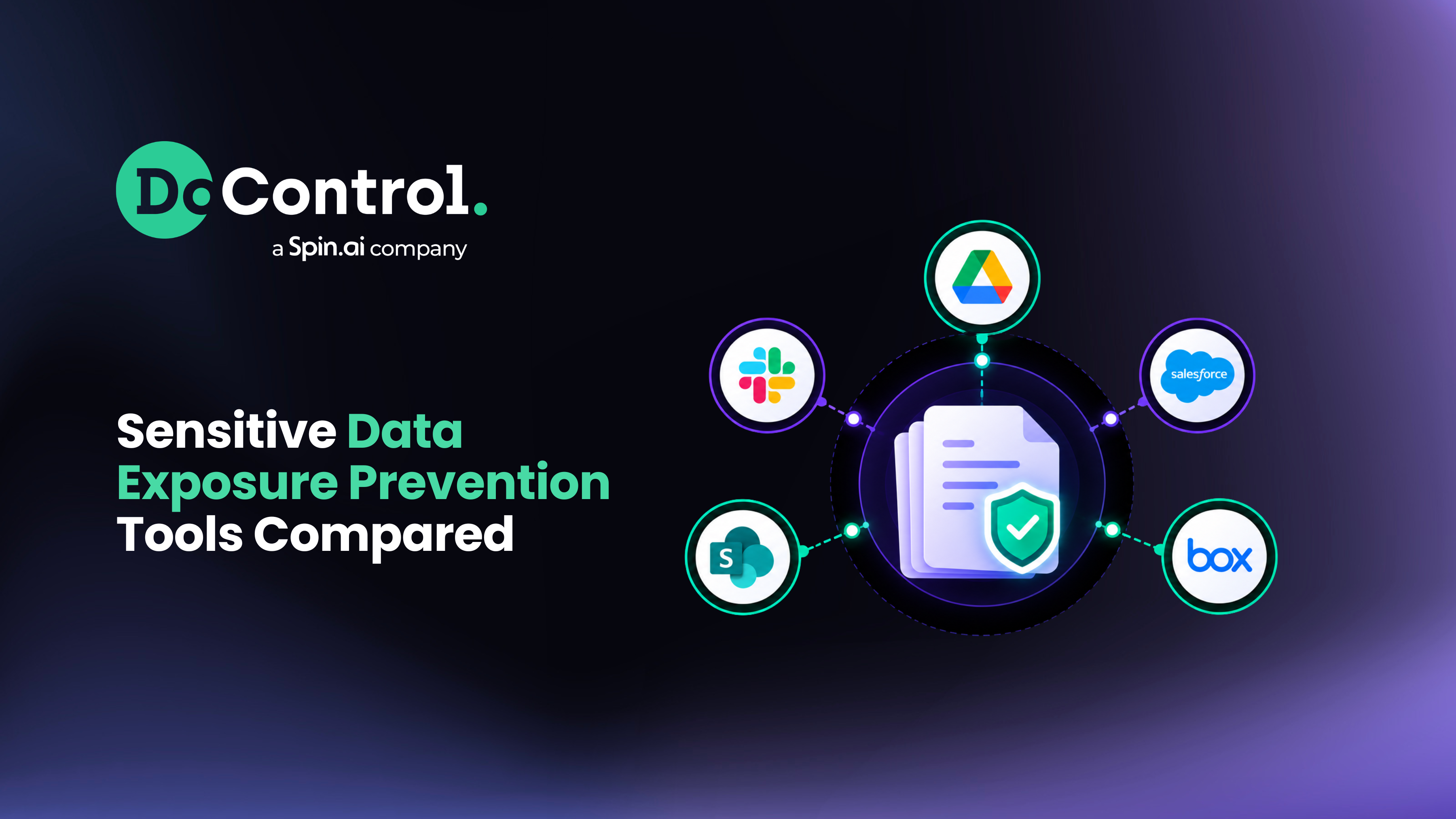
Sensitive data no longer lives in one database, network, or device. It is spread across SaaS applications like Google Workspace, Microsoft 365, Slack, Salesforce, GitHub, and Box – continuously shared between employees, external collaborators, third-party applications, and AI tools.
That creates a different data security problem.
Sensitive data exposure happens when business-critical information becomes accessible to people, applications, or systems that should not have access – or retains access longer than necessary. A file may be publicly shared, accessible to a former employee, downloaded to a personal account, exposed through an OAuth application, or available to an AI agent with overly broad permissions.
Preventing these scenarios requires more than finding sensitive data. Organizations need to understand where sensitive data lives, who and what can access it, how it is being shared or moved, and how exposure can be remediated when risk appears.
Data Loss Prevention (DLP) is central to this strategy. But in modern SaaS environments, effective exposure prevention increasingly overlaps with Data Access Governance, identity security, SaaS Security Posture Management (SSPM), insider risk, third-party application governance, and automated remediation.
Below, we compare seven tools and approaches to sensitive data exposure prevention – and where each fits.
What Is a Sensitive Data Exposure Prevention Tool?
A sensitive data exposure prevention tool helps organizations discover sensitive information, determine where and how that information is exposed, and prevent or remediate unauthorized access, sharing, movement, or exfiltration.
These capabilities are commonly associated with DLP, but today’s SaaS data protection goes further.
Think of the problem in four layers:
- Data discovery tells you sensitive data exists.
- DLP identifies or prevents risky data activity.
- Data Access Governance determines who or what should have access.
- Remediation fixes the exposure when access or activity violates policy.
For SaaS-heavy organizations, SaaS DLP brings these protections directly into the applications where employees create, access, and collaborate on business data. Instead of relying exclusively on endpoints or network traffic, SaaS DLP can provide visibility into application-level permissions, sharing, identities, integrations, and historical exposure.
How Does Sensitive Data Become Exposed in SaaS?
SaaS applications are built for collaboration. That makes data easy to use – but also easy to expose.
Common exposure paths include:
- Oversharing. Sensitive files become publicly accessible, organization-wide, or available to internal users who do not need them.
- External access. Contractors, vendors, partners, personal accounts, and other third parties gain access to sensitive information.
- Stale access. Former employees and old collaborators retain permissions after their relationship with the organization changes.
- Third-party applications. OAuth applications and integrations receive access to business data and may retain more privileges than necessary.
- AI and non-human identities. AI applications, agents, automations, and other NHIs increasingly interact directly with SaaS data using their own access scopes.
That is why modern sensitive data protection requires context. Finding a file containing PII is useful.
Knowing that the file contains PII and is publicly accessible, owned by a former employee, or available to an unnecessary third-party application is actionable.
Different security platforms solve different parts of this problem.
1. DoControl, a Spin.AI Company
Best for: Preventing and remediating sensitive data exposure across SaaS
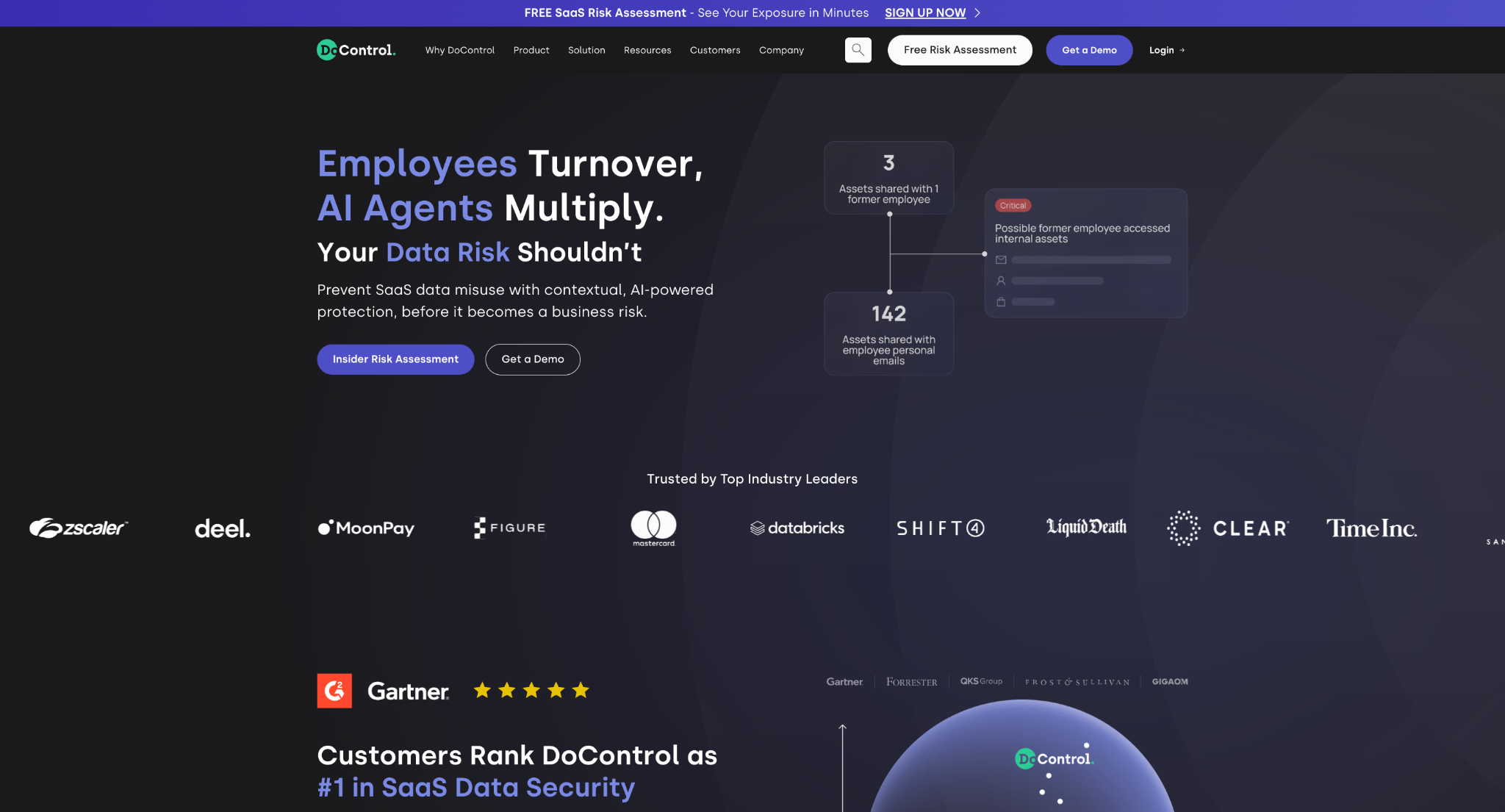
DoControl combines contextual SaaS DLP with Data Access Governance to help organizations understand not only what sensitive data exists, but who and what can access it, how it is exposed, and what should happen next.
DoControl connects directly to SaaS applications and maps relationships between data, users, identities, permissions, sharing activity, and sensitivity. Security teams can identify sensitive information that is public, externally shared, accessible through personal accounts, available to former employees, or internally overshared.
That context is paired with remediation. Organizations can revoke risky access, remove external shares, expire permissions, automate offboarding, engage end users, remediate historical exposure, and perform bulk remediation instead of manually addressing assets one at a time.
DoControl's acquisition by Spin.AI expands this approach further. DoControl's DLP, Data Access Governance, insider risk, and AI governance capabilities are now part of a broader security portfolio that includes SSPM, enterprise browser security, ransomware resilience, and additional protection around human and non-human identities.
This matters because sensitive data exposure is no longer confined to a file. Data moves between SaaS applications, browsers, users, integrations, and AI systems. Protecting it increasingly requires multiple layers of security.
Strengths
- SaaS-native DLP and sensitive-data classification
- Data Access Governance
- Asset-level permissions and sharing visibility
- Public, external, personal-account, and internal exposure detection
- Historical and continuous remediation
- Identity and business context
- Automated workflows and bulk remediation
- Expanded SaaS, AI, browser, and posture security through Spin.AI
Limitations
DoControl's core strength is SaaS data security. Organizations primarily looking for traditional endpoint or network-centric DLP controls may use other security layers alongside it.
What differentiates it
DoControl connects data sensitivity with access context and remediation. Instead of stopping at “Where is sensitive data?”, security teams can determine who can access it, whether that access is appropriate, and take action when it is not.
2. Nightfall AI
Best for: Sensitive-data detection and DLP across cloud applications
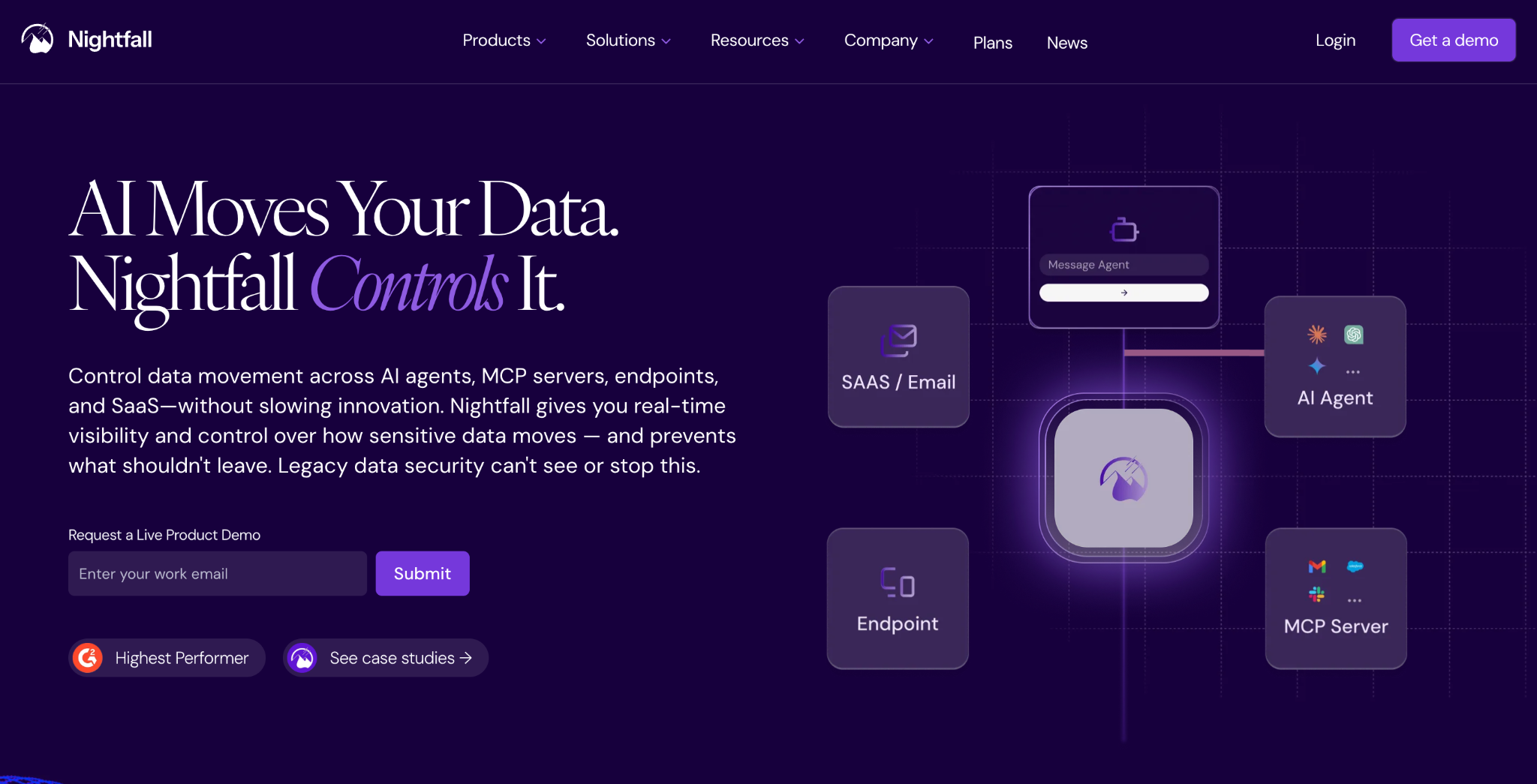
Nightfall AI takes a DLP-first approach to sensitive data protection. It focuses on detecting data such as PII, PHI, PCI information, credentials, and secrets across cloud applications and other modern communication environments.
Nightfall supports organizations whose primary challenge is identifying sensitive information and enforcing content-based policies across SaaS and cloud workflows.
Strengths
- Sensitive-data discovery and classification
- SaaS and cloud DLP
- Employee notifications and self-remediation workflows
- Coverage for structured and unstructured sensitive information
Limitations
Organizations should evaluate whether their primary requirement is sensitive-content detection or whether they also need deeper governance of the relationships between identities, permissions, collaborators, applications, and historical SaaS access.
What differentiates it
Nightfall is strongly oriented around modern, cloud-native DLP and sensitive-data detection.
3. Varonis
Best for: Sensitive-data discovery, permissions, and enterprise data exposure
Varonis approaches exposure through the relationship between sensitive data and permissions. Its data security platform helps organizations identify sensitive information, understand effective access, reduce excessive permissions, and prioritize risky exposure.
That makes Varonis relevant when organizations need to understand not just what data exists, but where excessive access creates risk.
Strengths
- Sensitive-data classification
- Permissions and effective-access analysis
- External sharing visibility
- Least-privilege initiatives
- Automated remediation
Limitations
Varonis addresses a broad enterprise data security footprint. SaaS-first organizations should compare the depth of application-specific SaaS workflows, identity context, and remediation they need against the broader data security architecture.
What differentiates it
Varonis brings sensitive-data discovery and permissions analysis together across a broader enterprise data estate.
4. Cyberhaven
Best for: Understanding how sensitive data moves
Cyberhaven approaches data protection through data lineage and behavior. Rather than looking only at the content itself, its technology emphasizes understanding the origin of data and what happens to it as users interact with and move it.
This can be particularly useful for detecting exfiltration and understanding the path sensitive information takes across users, applications, browsers, and endpoints.
Strengths
- Data lineage and provenance
- DLP and insider-risk use cases
- Visibility into data movement
- Behavioral context
- Exfiltration detection
Limitations
Organizations whose largest risk is persistent SaaS permissions, historical external sharing, or application-level access governance should evaluate those capabilities separately from data-movement controls.
What differentiates it
Cyberhaven's lineage approach focuses heavily on understanding the journey and origin of sensitive information.
5. Netskope
Best for: Inline cloud and web data protection
Netskope combines DLP with Security Service Edge (SSE) and CASB capabilities. Its approach is useful for organizations that want data protection integrated with broader controls around cloud applications, web activity, users, and traffic.
Netskope can apply DLP policies as data moves through supported cloud and web environments, giving organizations another layer for preventing sensitive information from leaving approved boundaries.
Strengths
- Enterprise DLP
- CASB and SSE capabilities
- Inline cloud and web controls
- Broad application coverage
- Threat and data protection within a larger security architecture
Limitations
Organizations primarily trying to remediate persistent SaaS access (such as old external permissions or historical oversharing inside an application) should evaluate API-level governance alongside inline controls.
What differentiates it
Netskope places DLP inside a broader network, web, and cloud security architecture.
6. Google Workspace Native DLP
Best for: Native sensitive-data protection within Google Workspace
Google provides native DLP and security controls that can serve as an important baseline for organizations operating primarily within Google Workspace.
Depending on the Workspace edition and configuration, administrators can create DLP policies around sensitive content and take actions such as restricting external sharing or limiting downloading, printing, and copying. Google also provides sharing controls, labels, audit capabilities, and other administrative security features.
But Google Workspace also demonstrates why sensitive data exposure extends beyond classification.
A sensitive Google Drive file can be properly classified and still become risky when it is publicly accessible, shared with a personal account, available to a former employee, inherited through broader permissions, or accessible to unnecessary collaborators.
Organizations should therefore think about DLP as one component of broader Google Workspace Security and Google Drive Security.
Additional controls may be needed to continuously manage Google Drive user permissions, bulk remove risky sharing permissions, identify Shared Drive files and folders shared externally, and protect sensitive information across its entire lifecycle.
Strengths
- Native Google Workspace integration
- Built-in DLP policies
- Sharing and administrative controls
- Google Drive labels and classification capabilities
- Strong starting point for Google-centric organizations
Limitations
Native controls operate primarily within Google's ecosystem. Organizations with sensitive data spread across multiple SaaS applications may need additional cross-application visibility, identity context, historical remediation, and centralized governance.
What differentiates it
The controls are built directly into the Google Workspace ecosystem, making them a logical foundation for Google-centric organizations.
7. Microsoft Purview
Best for: Sensitive-data protection across Microsoft environments
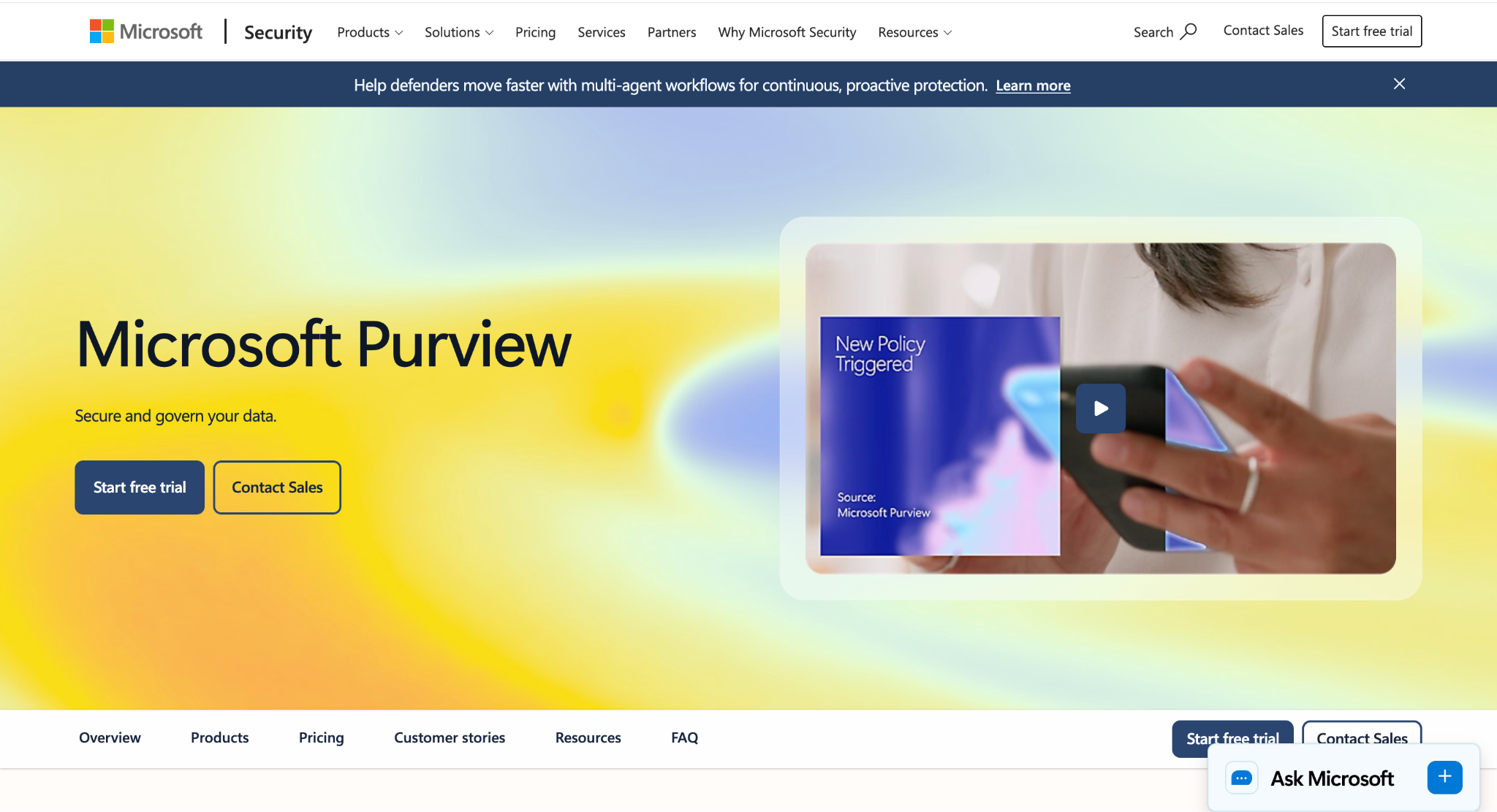
Microsoft Purview provides DLP, information protection, classification, compliance, and data governance capabilities across Microsoft's ecosystem.
For organizations heavily invested in Microsoft 365, Purview can provide a strong foundation for identifying sensitive information and applying policies across applications such as Exchange, SharePoint, OneDrive, Teams, and supported endpoints.
Strengths
- Deep Microsoft ecosystem integration
- DLP and information protection
- Classification and sensitivity labels
- Endpoint and Microsoft 365 coverage
- Compliance-oriented capabilities
Limitations
Organizations with a highly heterogeneous SaaS environment should evaluate the depth of protection required across non-Microsoft applications and whether additional SaaS-specific controls are necessary.
What differentiates it
Purview integrates data protection closely with the wider Microsoft security, productivity, and compliance ecosystem.
How to Choose a Sensitive Data Exposure Prevention Tool
Start with how your sensitive data becomes exposed, rather than which vendor has the longest feature list.
Ask these six questions:
1. Where does your sensitive data live?
Determine whether your biggest exposure exists in SaaS applications, endpoints, email, cloud storage, browsers, AI tools, or across several of these environments.
2. Can you understand access as well as content?
Knowing that a file contains sensitive data is only part of the problem. Determine whether you can see who and what has access to it and whether that access is appropriate.
3. Can you address historical exposure?
Data may have been overshared months or years before a new security policy was implemented. Exposure prevention should account for existing risk as well as new activity.
4. Can the platform remediate risk?
Detection without action creates another alert queue. Look for controls that can remove permissions, revoke external access, change sharing settings, quarantine content, engage users, or initiate automated workflows.
5. Does it understand identity and business context?
Employee status, department, external collaborators, personal accounts, third-party applications, AI agents, and non-human identities can all change whether access is legitimate or risky.
6. Does it fit your existing security architecture?
Sensitive data rarely travels through only one layer. SaaS-heavy organizations may prioritize API-based DLP and access governance, while endpoint- or network-heavy environments may rely more heavily on endpoint DLP, SSE, or CASB controls.
For many organizations, the answer is not a single tool. DLP is a program, and sensitive data can require different protections as it moves across SaaS, browsers, endpoints, email, AI, and other environments.
DoControl + Spin.AI: From SaaS DLP to Layered Data Protection
Modern data exposure doesn't happen in one place. Sensitive information moves between SaaS applications, users, external collaborators, third-party apps, browsers, and AI systems, creating multiple opportunities for exposure along the way.
The combination of DoControl and Spin.AI brings complementary security layers together to address these risks across the SaaS data lifecycle.
Stronger Together, and Available Today
The value of DoControl and Spin.AI coming together isn't simply a longer list of security features. It's the ability to protect sensitive data across different stages of the same security problem.
DoControl brings the data and access layer – DLP, Data Access Governance, automated remediation, insider risk, and AI governance. Spin.AI expands that protection across SaaS posture, browser activity, identities, and ransomware resilience.
Together, these capabilities create a layered approach to protecting SaaS data wherever it lives, moves, and is accessed.
Conclusion
Sensitive data exposure prevention is broader than finding sensitive information.
Security teams need to understand what the data is, where it lives, who and what can access it, how it is moving, whether that activity creates risk, and how exposure can be remediated.
Different security technologies answer different parts of those questions. DLP provides critical content and policy controls.
For SaaS-heavy organizations, the priority should be building a security architecture that protects sensitive data without losing sight of the users, applications, identities, permissions, and AI systems surrounding it.

.png)